
Rare earth metallurgy is one of the most contamination-sensitive processes in modern metal production.
Whether producing Neodymium (Nd), Praseodymium (Pr), Lanthanum (La), Cerium (Ce), or related alloys, even small process deviations can influence downstream material performance.
While many discussions focus on furnace temperature, electrolysis efficiency, or chemical composition, another factor is often underestimated:
What happens when molten metal contacts handling tools.
Rare Earth Molten Systems Are Highly Reactive
Rare earth molten metals operate under elevated temperatures and aggressive chemical conditions.
During melting, transfer, electrolysis, and sampling, molten metal may interact with:
- Oxygen
- Moisture
- Nitrogen
- Residual impurities
- Tool surface materials
In practical production environments, contamination may occur not only from raw materials but also during routine operations such as:
- Sampling
- Transfer
- Temporary holding
- Electrolysis
- Laboratory preparation
For operations targeting stable quality and repeatable analysis results, process consistency becomes increasingly important.
Sampling Is More Than Taking a Liquid Sample
In many plants, sampling is treated as a simple operation.
However, sampling directly affects:
✓ Laboratory result consistency
✓ Process adjustment decisions
✓ Yield stability
✓ Material traceability
If contamination enters during sampling, operators may receive inaccurate analytical data, resulting in unnecessary process correction.
This is especially important for molten rare earth systems where process windows can be narrow.
Material Selection of High-Temperature Tools Matters
The material used for process tools influences:
- Thermal stability
- Chemical resistance
- Surface interaction
- Service life
- Ease of operation
Different plants may use different combinations depending on their process route.
Typical applications include:
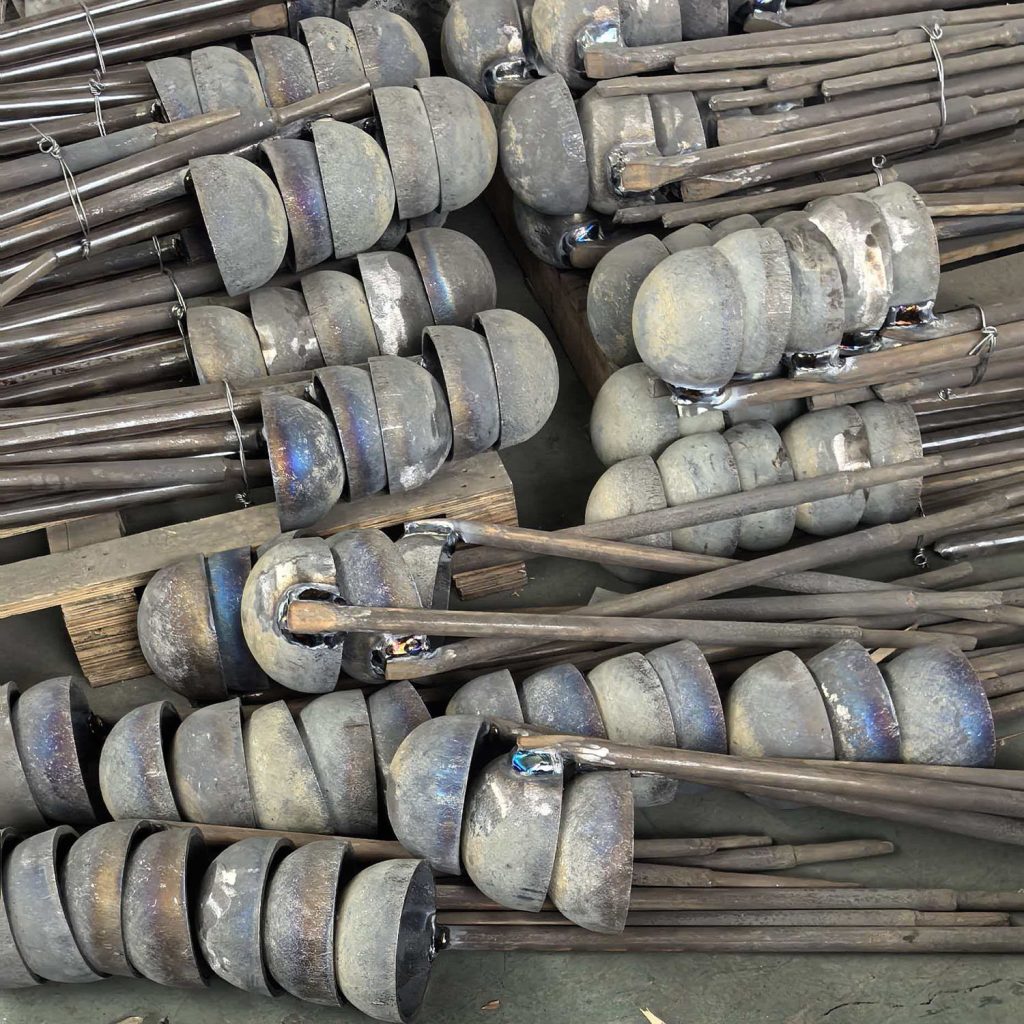
Titanium Alloy Sampling Ladles
Used for collecting molten metal samples under elevated temperatures while maintaining handling efficiency.
Tungsten Electrodes / Cathodes
Commonly used in high-temperature and electrochemical environments due to temperature resistance.
Tungsten–Molybdenum Crucibles
Applied where stable containment under severe thermal conditions is required.
Selection should always match actual temperature range, atmosphere, melt chemistry, and operating practice.
The Future of Rare Earth Processing Is Process Stability
As global rare earth production continues moving toward higher purity and higher consistency, process details become increasingly important.
Contamination control is not only about refining systems.
It is also about every tool that comes into contact with molten metal.
Sampling may look small.
But in many metallurgical operations, it is where process quality begins.
Interested in discussing high-temperature tooling for rare earth metallurgy?
Contact our engineering team for application discussion and custom solutions.