
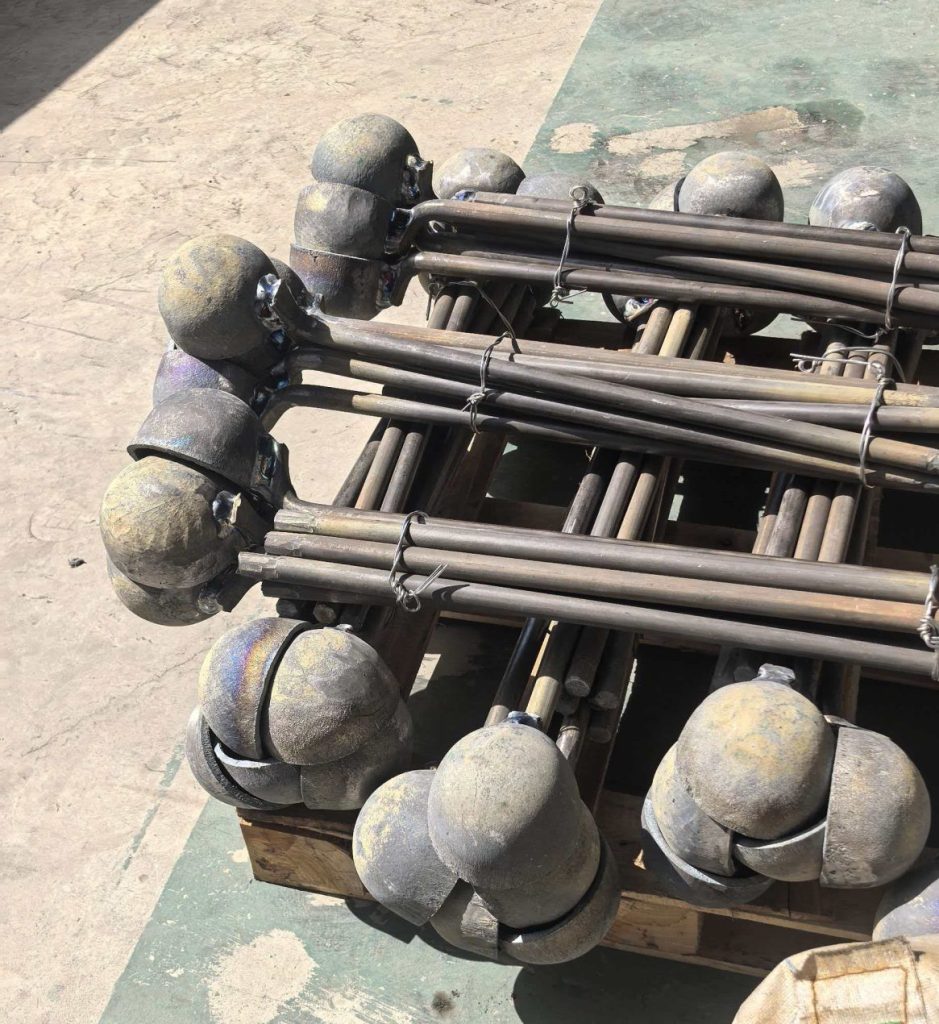
Selecting the correct sampling ladle size is one of the most important decisions in rare earth metallurgy operations.
Although often underestimated, ladle dimensions directly affect:
- Sampling safety
- Operational efficiency
- Melt stability
- Sample accuracy
- Tool service life
In rare earth production involving Neodymium (Nd), Praseodymium (Pr), Lanthanum (La), and Cerium (Ce), molten metal conditions are highly reactive and temperature-sensitive.
Therefore, size selection must be based on engineering logic rather than estimation.
1. Why Sampling Ladle Size Matters
In molten rare earth metal handling, a sampling ladle that is too large or too small can create operational risks.
Incorrect sizing may result in:
- Spillage of molten metal
- Unsafe handling conditions
- Incomplete or inconsistent sampling
- Excess thermal load on the tool
- Shortened service life
Proper sizing ensures stable and repeatable sampling performance.
2. Key Parameters for Selecting Ladle Size
To select the correct sampling ladle, engineers typically evaluate the following parameters:
2.1 Furnace or Crucible Opening Diameter
This is the first and most critical parameter.
The ladle head diameter must be smaller than the furnace opening to ensure:
- Smooth insertion
- Safe withdrawal
- No mechanical interference
A common engineering rule is:
Ladle head diameter should be 10–30% smaller than furnace opening.
2.2 Required Sample Volume
Different plants require different sample quantities:
- Laboratory analysis samples: 200g – 1kg
- Process control samples: 1kg – 3kg
- Industrial sampling operations: up to 5kg or more
The ladle volume should match actual usage.
Oversized ladles increase thermal stress and handling difficulty, while undersized ladles may require repeated sampling.
2.3 Molten Metal Temperature
Rare earth molten metals typically operate under high-temperature conditions.
Higher temperature systems require:
- Smaller, more controlled ladle volumes
- Faster sampling cycles
- Improved thermal stability of materials
In high-temperature environments, titanium alloy and tungsten-based tools are commonly selected depending on process conditions.
2.4 Handle Length and Operator Distance
Handle length is critical for operator safety.
Typical design ranges:
- Laboratory scale: 400–800 mm
- Industrial furnace operation: 800–1500 mm
- Deep crucible or high-risk environments: customized longer handles
Longer handles reduce exposure to radiant heat but require higher structural rigidity.
2.5 Ladle Depth and Shape
Ladle geometry affects:
- Filling speed
- Flow control
- Slag inclusion risk
- Sampling repeatability
Common shapes include:
- Semi-spherical (better flow control)
- Cylindrical (higher volume capacity)
- Custom deep bowl design (for large volume sampling)
3. Typical Size Recommendations (Industry Reference)
While every plant is different, the following ranges are commonly used in rare earth metallurgy:
| Application Type | Ladle Head Diameter | Depth | Typical Capacity |
|---|---|---|---|
| Laboratory sampling | 60–100 mm | 40–70 mm | 0.2–1 kg |
| Standard industrial sampling | 100–150 mm | 50–100 mm | 1–3 kg |
| Heavy-duty molten metal sampling | 150–200 mm | 80–120 mm | 3–5 kg |
These values should be adjusted based on actual furnace geometry and operating temperature.
4. Material Selection Also Affects Size Design
Size selection cannot be separated from material selection.
For example:
Titanium Alloy Sampling Ladles
- Suitable for moderate to high temperature sampling
- Lightweight, easier for larger handles
- Often used in repetitive sampling operations
Tungsten / Molybdenum-Based Tools
- Used in extreme temperature environments
- Higher density requires careful balance of handle design
- More suitable for crucibles or fixed sampling systems
Material choice directly affects allowable wall thickness and structural design.
5. Common Mistakes in Ladle Size Selection
Many plants make the following mistakes:
Mistake 1: Choosing based only on volume
Ignoring furnace geometry and operator handling limits.
Mistake 2: Oversizing the ladle
Leads to unnecessary weight, heat load, and slower operation.
Mistake 3: Ignoring handle length
Results in unsafe working distance from molten metal.
Mistake 4: Using one design for all processes
Rare earth systems often require process-specific customization.
6. Engineering Approach to Correct Selection
A proper selection process should follow this sequence:
- Confirm furnace/crucible opening size
- Define required sample volume
- Evaluate operating temperature
- Determine operator distance requirements
- Select material (Titanium / Tungsten / Molybdenum)
- Finalize geometry and handle structure
This ensures both safety and performance stability.
7. Conclusion
Sampling ladle size is not a simple dimension choice.
It is a balance between:
- Process requirements
- Safety considerations
- Material behavior
- Operational efficiency
In rare earth metallurgy, where process stability is critical, correct tool sizing directly contributes to consistent production quality.
If you need assistance selecting sampling ladle size for your furnace or process, technical drawings and customization support are available based on your operating conditions.