
Accurate sampling is one of the foundations of process control in rare earth metallurgy.
Whether producing Neodymium (Nd), Praseodymium (Pr), Lanthanum (La), Cerium (Ce), or related rare earth alloys, laboratory analysis is only as reliable as the quality of the sample collected.
Even with advanced analytical equipment, inaccurate sampling can lead to misleading data, unnecessary process adjustments, reduced production efficiency, and inconsistent product quality.
This article discusses several common causes of sampling errors and practical methods to reduce them.
Why Sampling Accuracy Matters
Sampling is more than collecting molten metal.
It provides the data used to:
- Monitor production stability
- Verify alloy composition
- Adjust process parameters
- Evaluate product quality
- Support quality assurance documentation
If the sample does not accurately represent the molten metal, every decision based on that analysis may also be inaccurate.
1. Sampling at the Wrong Time
One of the most common mistakes is taking samples before the molten metal has reached a stable condition.
Sampling too early may produce results that do not represent the actual composition of the melt.
Good practice includes:
- Waiting until process conditions are stable
- Following standard sampling procedures
- Maintaining consistent sampling intervals
Consistency is often more important than speed.
2. Using Worn or Damaged Sampling Tools
Repeated exposure to high temperatures can gradually affect the condition of sampling tools.
Common issues include:
- Surface oxidation
- Mechanical deformation
- Rough internal surfaces
- Reduced structural integrity
These changes may influence sampling consistency and increase maintenance requirements.
Routine inspection and timely replacement of worn tools can improve process reliability.
3. Selecting an Inappropriate Tool Material
Different materials behave differently under high-temperature conditions.
When selecting sampling tools, engineers should evaluate:
- Operating temperature
- Chemical environment
- Corrosion resistance
- Mechanical strength
- Expected service life
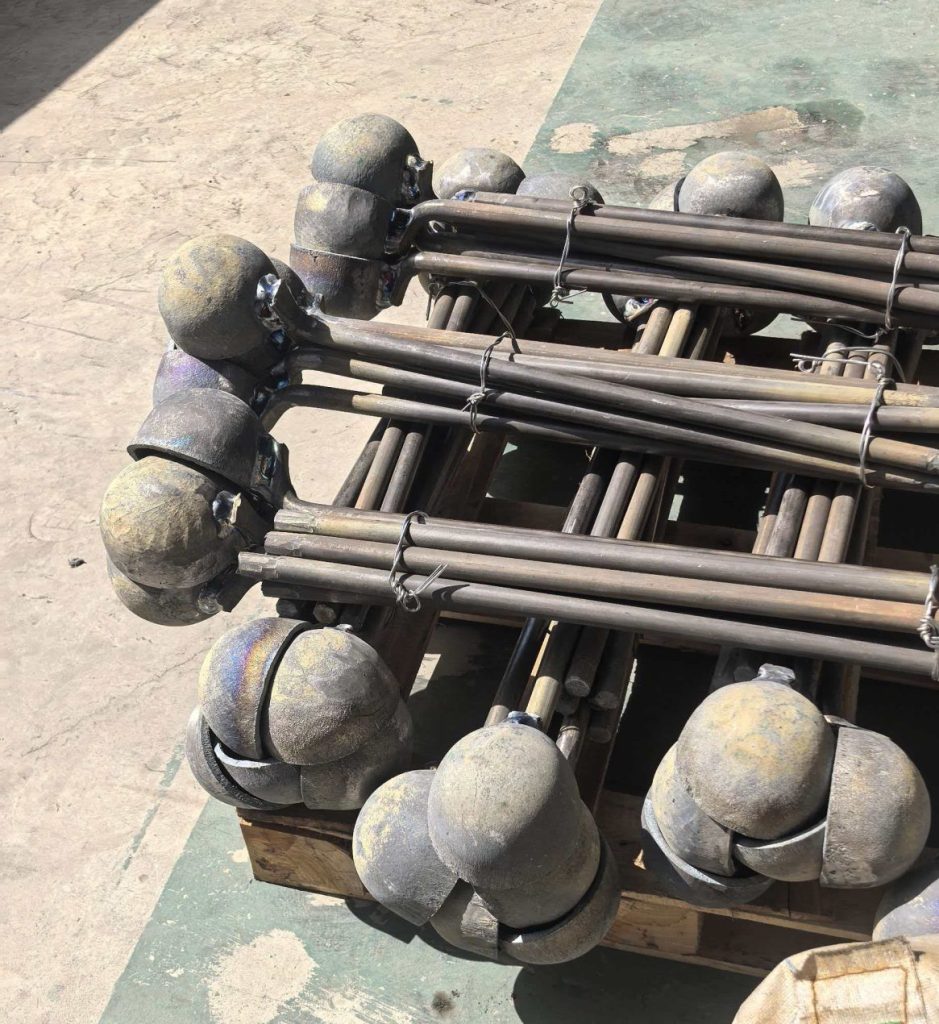
For demanding rare earth applications, titanium alloy sampling ladles are often selected because of their excellent corrosion resistance, relatively low weight, and long service life.
The most suitable material should always be determined according to the actual production process.
4. Incorrect Ladle Size
Using a ladle that is too large or too small may affect sampling efficiency.
Potential problems include:
- Incomplete filling
- Excessive molten metal movement
- Difficult handling
- Increased operator fatigue
- Reduced repeatability
Ladle diameter, depth, and handle length should be selected according to furnace dimensions and required sample capacity.
5. Poor Sampling Technique
Even with high-quality equipment, inconsistent operating methods can introduce variation.
Examples include:
- Different immersion depths
- Different sampling angles
- Different holding times
- Inconsistent pouring procedures
Standardized operating procedures help reduce operator-to-operator variation.
6. Inadequate Cleaning Between Samples
Residual material from previous samples may affect subsequent analyses.
Regular cleaning helps maintain consistency.
Recommended practices include:
- Cleaning according to plant procedures
- Inspecting the ladle before each use
- Replacing damaged tools when necessary
Cleaning methods should always match plant safety requirements and material compatibility.
7. Ignoring Tool Design
Tool design is just as important as tool material.
Factors such as:
- Ladle head diameter
- Bowl depth
- Wall thickness
- Handle length
- Welding quality
- Overall balance
all influence operator comfort and sampling consistency.
A customized design often performs better than a standard off-the-shelf product.
Best Practices for Reliable Sampling
To improve sampling consistency, consider the following checklist:
✓ Use tools suitable for your operating temperature.
✓ Select the correct ladle size based on furnace dimensions.
✓ Inspect sampling tools regularly.
✓ Replace worn or damaged equipment promptly.
✓ Standardize sampling procedures across operators.
✓ Record sampling conditions for traceability.
✓ Work with equipment suppliers who understand your metallurgical process.
Conclusion
Accurate sampling is an essential part of successful rare earth metallurgy.
Reliable results depend on more than laboratory instruments.
Proper timing, suitable equipment, correct operating methods, and well-maintained sampling tools all contribute to obtaining representative samples.
By improving these factors, manufacturers can enhance process stability, reduce unnecessary adjustments, and support consistent product quality.
If you are looking for customized high-temperature sampling ladles, tungsten electrodes, or tungsten-molybdenum crucibles for rare earth metallurgy, our engineering team can recommend solutions based on your operating temperature, furnace dimensions, and production requirements.