
One of the most common questions engineers ask before purchasing a high-temperature sampling ladle is:
“How long will it last?”
The answer is not as simple as giving a fixed number of days or sampling cycles.
In high-temperature metallurgy, the service life of a sampling ladle depends on multiple operating conditions, including temperature, molten metal chemistry, sampling frequency, and tool design.
Understanding these factors helps plants choose the right tool and reduce long-term operating costs.
There Is No Universal Service Life
Unlike standard industrial tools, sampling ladles used in rare earth metallurgy operate under severe conditions.
Each sampling cycle exposes the ladle to:
- Rapid heating
- Thermal shock
- Molten metal corrosion
- Mechanical handling
- Repeated cooling
Because every production process is different, two identical ladles may have very different service lives in different plants.
Instead of asking:
“How many days will the ladle last?”
A better question is:
“How long will the ladle perform reliably under my operating conditions?”
What Determines the Service Life?
1. Molten Metal Type
Different molten metals create different working environments.
For example:
- Neodymium (Nd)
- Praseodymium (Pr)
- Lanthanum (La)
- Cerium (Ce)
may have different chemical behaviors and operating conditions.
Some melts are more aggressive than others, leading to different wear rates.
For this reason, the same ladle may last longer in one application than another.
2. Operating Temperature
Temperature is one of the biggest factors affecting service life.
Higher temperatures generally accelerate:
- Oxidation
- Surface degradation
- Material fatigue
- Thermal stress
As operating temperature increases, proper material selection becomes increasingly important.
3. Sampling Frequency
A ladle used several times per day experiences very different wear compared with one used dozens of times during every production shift.
High-frequency sampling increases:
- Heating and cooling cycles
- Mechanical wear
- Operator handling stress
Plants with continuous production usually require more durable tool designs.
4. Ladle Design
Material alone does not determine service life.
Engineering design also plays an important role.
Important factors include:
- Wall thickness
- Bowl depth
- Head diameter
- Weld quality
- Handle reinforcement
- Weight balance
A properly engineered ladle distributes thermal and mechanical stress more effectively during repeated operation.
5. Operator Handling
Good operating practice can significantly extend tool life.
Examples include:
- Avoiding unnecessary impact against furnace walls
- Preventing excessive mechanical force
- Following standard heating procedures
- Inspecting tools before use
- Replacing damaged tools before failure occurs
Consistent operating procedures improve both safety and durability.
Why Titanium Alloy Is Commonly Selected
Titanium alloy is widely used for high-temperature sampling because it offers a combination of:
- Excellent corrosion resistance
- High strength
- Relatively low weight
- Good resistance to repeated thermal cycling
These characteristics make titanium alloy suitable for many demanding sampling operations.
However, the most suitable material should always be selected according to actual operating conditions.
When Should a Sampling Ladle Be Replaced?
Rather than replacing tools after a fixed number of uses, many plants monitor the physical condition of the ladle.
Replacement is generally recommended when signs such as the following become noticeable:
- Visible deformation
- Excessive wall thinning
- Deep surface damage
- Cracks around welded areas
- Loose handle connection
- Reduced structural stability
Replacing tools before failure helps reduce production interruptions and improves operator safety.
A Practical Example
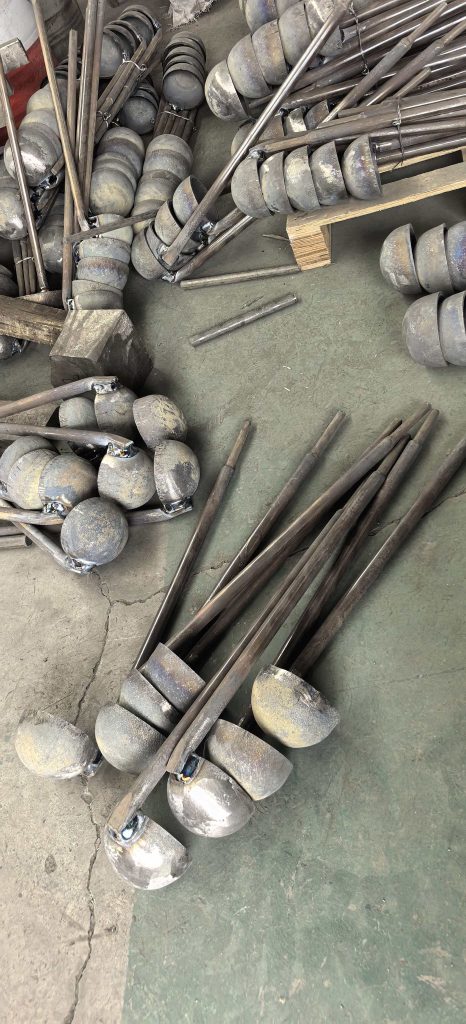
In one rare earth production application involving molten Lanthanum, our titanium alloy sampling ladles have achieved a cumulative sampling capacity of approximately 4–5 tonnes of molten metal before replacement under the customer’s operating conditions.
This example reflects one specific production environment.
Actual service life will vary depending on factors such as molten metal type, operating temperature, sampling frequency, furnace design, and maintenance practices.
Looking Beyond Purchase Price
When evaluating sampling ladles, purchase price is only one part of the overall cost.
Plants should also consider:
- Expected service life
- Maintenance frequency
- Production downtime
- Replacement intervals
- Operator efficiency
- Overall cost of ownership
In many cases, a longer-lasting tool can reduce total operating costs, even if its initial purchase price is higher.
How to Maximize Sampling Ladle Life
To improve durability and reduce maintenance costs, consider the following recommendations:
✓ Select the correct material for your process.
✓ Match the ladle size to your furnace opening and required sample volume.
✓ Avoid unnecessary mechanical impact during operation.
✓ Inspect tools regularly for signs of wear.
✓ Replace damaged ladles before structural failure occurs.
✓ Work with a supplier capable of providing customized designs for your operating conditions.
Conclusion
The service life of a high-temperature sampling ladle cannot be defined by a single number.
Instead, it is determined by the interaction of material selection, operating temperature, molten metal type, sampling frequency, engineering design, and maintenance practices.
Choosing a well-designed sampling ladle that matches your actual process conditions helps improve operational efficiency, reduce maintenance costs, and support more consistent production.
Need Help Selecting a Long-Life Sampling Ladle?
If your plant processes Nd, Pr, La, Ce, NdPr alloys, or other high-temperature molten metals, we can recommend a customized titanium alloy sampling ladle based on your specific operating conditions.
To help us provide the most suitable solution, please share:
- Molten metal type
- Operating temperature
- Furnace or crucible opening diameter
- Required sample capacity
- Handle length
- Current sampling tool (if available)
- Photos or technical drawings of your application
Our engineering team will recommend a customized design that balances durability, safety, and operational efficiency.