
Rare earth metallurgy places exceptionally high demands on every piece of equipment that comes into contact with molten metal.
From melting and electrolysis to sampling and quality inspection, selecting the right tooling can influence process efficiency, operator safety, maintenance costs, and the consistency of analytical results.
Among the materials commonly used for high-temperature sampling tools, titanium alloy has become a preferred choice for many rare earth processing applications.
What makes titanium alloy suitable for these demanding environments?
The Challenges of Rare Earth Molten Metal Sampling
Sampling molten rare earth metals is very different from sampling conventional alloys.
Processes involving Neodymium (Nd), Praseodymium (Pr), Lanthanum (La), Cerium (Ce), or NdPr alloys often operate at temperatures exceeding 1,000°C. Molten metals are highly reactive, and repeated sampling exposes tools to:
- High thermal stress
- Rapid heating and cooling cycles
- Corrosive process environments
- Mechanical wear from frequent use
- Continuous operator handling
Because sampling is performed repeatedly during production, the durability and stability of the sampling ladle directly affect operational efficiency.
Why Titanium Alloy Is Widely Used
1. Excellent Corrosion Resistance
Titanium alloy is well known for its outstanding resistance to corrosion in many aggressive industrial environments.
For sampling operations that involve repeated contact with molten rare earth metals, good corrosion resistance can help maintain tool integrity and reduce the frequency of replacement.
A more stable tool surface also contributes to consistent handling during repeated production cycles.
2. High Strength-to-Weight Ratio
Compared with many traditional metallic materials, titanium alloy offers high mechanical strength while remaining relatively lightweight.
This provides several practical advantages:
- Easier manual operation
- Reduced operator fatigue
- Better control during sampling
- Improved safety when working close to high-temperature furnaces
In facilities where hundreds of samples may be collected each week, reducing tool weight can noticeably improve operator comfort.
3. Long Service Life
Frequent replacement of sampling tools increases both maintenance costs and production interruptions.
When properly designed and used within appropriate operating conditions, titanium alloy sampling ladles generally provide a longer service life than many conventional alternatives.
Longer service life may help:
- Reduce maintenance downtime
- Lower replacement frequency
- Improve production continuity
- Reduce long-term operating costs
Actual service life depends on factors such as temperature, molten metal chemistry, sampling frequency, and operating procedures.
4. Stable Performance During Repeated Thermal Cycling
Sampling tools are repeatedly heated and cooled throughout production.
Materials that cannot tolerate thermal cycling may experience distortion, cracking, or accelerated degradation.
Titanium alloy performs well under repeated thermal exposure when properly engineered, making it suitable for continuous industrial sampling operations.
Material Selection Is Only One Part of the Solution
Although material selection is important, overall tool performance also depends on engineering design.
A well-designed sampling ladle should consider:
- Ladle head diameter
- Bowl depth
- Wall thickness
- Handle length
- Handle balance
- Welding quality
- Surface finish
These design details influence both operator safety and sampling consistency.
For this reason, many rare earth plants prefer customized sampling tools rather than standard catalog products.
Typical Applications
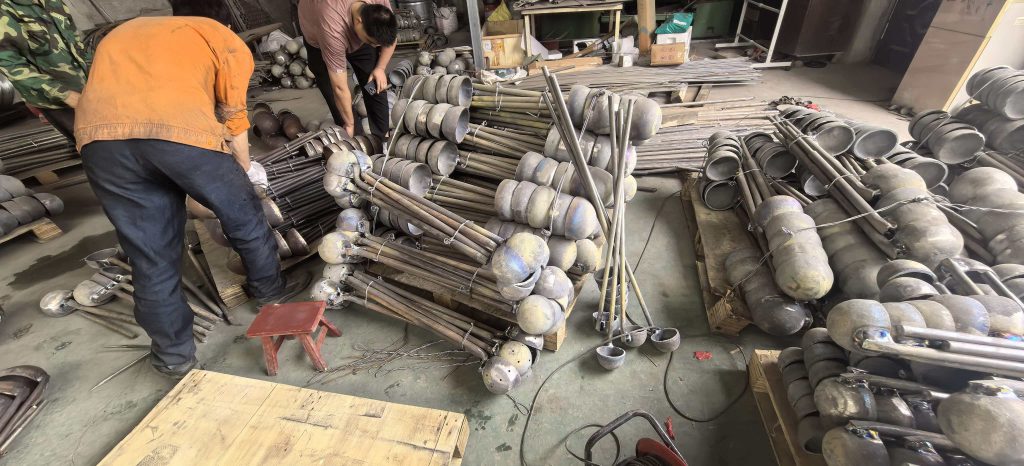
Titanium alloy sampling ladles are commonly used in operations such as:
- Rare earth molten metal sampling
- Nd and Pr alloy production
- Lanthanum and Cerium processing
- High-temperature laboratory sampling
- Process quality control
- Pilot-scale metallurgical research
The exact configuration should always be selected according to furnace dimensions, operating temperature, and required sample volume.
Practical Selection Tips
Before ordering a sampling ladle, engineers should prepare the following information:
- Type of molten metal
- Operating temperature
- Furnace or crucible opening diameter
- Required sample weight or volume
- Handle length
- Sampling frequency
- Existing tool material (if available)
Providing these details allows the supplier to recommend an appropriate design rather than simply supplying a standard product.
Beyond Purchase Price: Consider Total Operating Cost
Many buyers focus primarily on the initial purchase price of a sampling ladle.
However, long-term operating cost is often more important.
Factors such as:
- Service life
- Maintenance frequency
- Replacement downtime
- Operator efficiency
- Consistency of sampling operations
can have a much greater impact on production costs over time than the purchase price alone.
Evaluating the total cost of ownership helps plants make better long-term decisions.
Conclusion
Titanium alloy has become a preferred material for many rare earth molten metal sampling applications because it combines corrosion resistance, mechanical strength, relatively low weight, and reliable performance under demanding operating conditions.
However, selecting the right sampling tool is not simply a matter of choosing a material.
The most effective solution is one that matches the specific operating environment, including furnace design, molten metal type, sampling frequency, and temperature.
A properly designed titanium alloy sampling ladle can support safer operation, improve sampling efficiency, and contribute to more consistent process control throughout rare earth production.
Need Help Selecting the Right Sampling Ladle?
If your operation involves Nd, Pr, La, Ce, NdPr alloys, or other high-temperature molten metals, we can help you evaluate the most suitable sampling ladle design based on your actual process conditions.
To recommend an appropriate solution, simply provide:
- Molten metal type
- Operating temperature
- Furnace or crucible opening diameter
- Required sample capacity
- Handle length
- Photos or drawings of your existing equipment
Our engineering team can provide customized titanium alloy sampling ladles designed for high-temperature metallurgical applications.