
Heat exchangers are essential components in many industrial systems, including chemical processing, power generation, marine engineering, and seawater desalination.
However, selecting the right tube material is critical because heat exchanger tubes are often exposed to:
- Seawater
- Chloride solutions
- Chemical fluids
- High temperatures
- Continuous operating conditions
Traditional materials such as stainless steel and copper alloys may suffer from corrosion, fouling, or reduced service life in aggressive environments.
For these demanding applications, titanium tubes have become one of the preferred material choices due to their outstanding corrosion resistance, lightweight properties, and long-term reliability.
This article explains why titanium tubes are widely used in heat exchangers and how to select the right titanium tube for industrial applications.
Why Material Selection Matters for Heat Exchanger Tubes
The tube is one of the most critical components of a heat exchanger.
During operation, tubes must withstand:
- Internal pressure
- Thermal cycling
- Chemical exposure
- Fluid flow erosion
- Long-term corrosion risks
A tube failure can result in:
- Equipment shutdown
- Maintenance costs
- Production losses
- Safety risks
Therefore, choosing a material with excellent corrosion resistance and mechanical stability is essential.
Why Titanium Tubes Are Preferred for Heat Exchangers
1. Excellent Corrosion Resistance
The biggest advantage of titanium tubes is their exceptional corrosion resistance.
Titanium naturally forms a stable titanium oxide passive layer on its surface.
This protective layer allows titanium to resist:
- Chloride corrosion
- Seawater corrosion
- Chemical attack
- Oxidizing environments
Unlike many metals, titanium can maintain corrosion resistance even after surface damage because the oxide layer can quickly regenerate.
2. Outstanding Seawater Resistance
Seawater is one of the most challenging environments for metal materials.
It contains:
- High chloride concentration
- Dissolved oxygen
- Marine microorganisms
Many metals experience:
- Pitting corrosion
- Crevice corrosion
- Stress corrosion cracking
Titanium, especially Grade 2 titanium, performs exceptionally well in seawater environments.
Therefore, titanium tubes are widely used in:
- Marine heat exchangers
- Ship cooling systems
- Offshore platforms
- Desalination plants
3. Long Service Life and Low Maintenance
Heat exchanger replacement can be extremely expensive.
Titanium tubes offer:
- Long operating life
- Reduced maintenance requirements
- Stable performance
- Lower risk of unexpected failure
Although titanium has a higher initial material cost compared with some alternatives, the total lifecycle cost can be lower because of reduced maintenance and replacement frequency.
4. High Strength-to-Weight Ratio
Titanium has approximately half the density of stainless steel while maintaining excellent mechanical properties.
Advantages include:
- Reduced equipment weight
- Easier installation
- Better structural efficiency
This is especially valuable for:
- Marine applications
- Offshore systems
- Aerospace-related heat transfer equipment
5. Excellent Resistance to Chloride Environments
Chloride ions are one of the main causes of corrosion failure in metals.
Common chloride-containing environments include:
- Seawater
- Salt solutions
- Chemical processing fluids
Titanium provides excellent resistance where stainless steel may require higher alloy grades or additional protection.
Titanium Tube vs Stainless Steel Tube for Heat Exchangers
| Property | Titanium Tube | Stainless Steel Tube |
|---|---|---|
| Seawater Resistance | Excellent | Depends on grade |
| Chloride Resistance | Excellent | Moderate to Good |
| Weight | Lower | Higher |
| Corrosion Risk | Very Low | Higher in harsh environments |
| Service Life | Very Long | Depends on conditions |
| Initial Cost | Higher | Lower |
| Maintenance Requirement | Low | Higher |
For general applications, stainless steel remains a cost-effective choice.
However, for aggressive environments where corrosion failure is unacceptable, titanium is often the preferred solution.
Common Titanium Tube Grades for Heat Exchangers
Grade 2 Titanium Tube
Grade 2 is the most commonly used commercially pure titanium grade.
Advantages:
- Excellent corrosion resistance
- Good mechanical properties
- Excellent weldability
- Cost-effective
Typical applications:
- Condensers
- Heat exchangers
- Chemical equipment
- Desalination systems
Grade 1 Titanium Tube
Grade 1 provides:
- Higher ductility
- Excellent corrosion resistance
- Better formability
Applications:
- Specialized heat exchanger components
- Fabricated equipment
Grade 7 Titanium Tube
Grade 7 contains palladium, improving corrosion resistance in certain chemical environments.
Applications:
- Chemical processing
- Acid handling systems
ASTM Standards for Titanium Heat Exchanger Tubes
When purchasing titanium tubes, international standards are commonly required.
ASTM B338
ASTM B338 is one of the most commonly specified standards for titanium tubes used in:
- Condensers
- Heat exchangers
- Industrial thermal equipment
It covers:
- Seamless titanium tubes
- Welded titanium tubes
Requirements include:
- Chemical composition
- Mechanical properties
- Dimensions
- Testing requirements
Titanium Tube Applications in Different Industries
1. Power Generation
Titanium condenser tubes are widely used in power plants because they can handle:
- Cooling water
- Seawater systems
- Long operating cycles
2. Desalination Plants
Seawater desalination requires materials with exceptional corrosion resistance.
Titanium tubes are used in:
- Evaporators
- Heat recovery systems
- Thermal desalination equipment
3. Chemical Processing
Chemical plants use titanium tubes for:
- Heat exchangers
- Reactors
- Cooling systems
Especially where fluids contain:
- Chlorides
- Aggressive chemicals
- Corrosive media
4. Marine Industry
Applications include:
- Ship cooling systems
- Offshore equipment
- Marine heat exchangers
Titanium provides reliable performance in seawater environments.
How to Select the Right Titanium Tube?
Before purchasing titanium tubes, consider:
1. Operating Environment
Evaluate:
- Fluid composition
- Chloride concentration
- Temperature
- Pressure
2. Tube Specification
Confirm:
- Outer diameter
- Wall thickness
- Length
- Seamless or welded type
3. Material Grade
Choose based on application:
| Application | Recommended Grade |
|---|---|
| General heat exchanger | Grade 2 |
| Maximum corrosion resistance | Grade 7 |
| High formability requirement | Grade 1 |
4. Certification Requirements
Industrial buyers may require:
- Material Test Certificate (MTC)
- Chemical analysis
- Mechanical testing
- Eddy current testing
- Dimensional inspection
Titanium Tube Manufacturing Capability
Shaanxi Metres Metals Manufacturing Co., Ltd. supplies titanium tubes for industrial applications worldwide.
Our titanium tube products include:
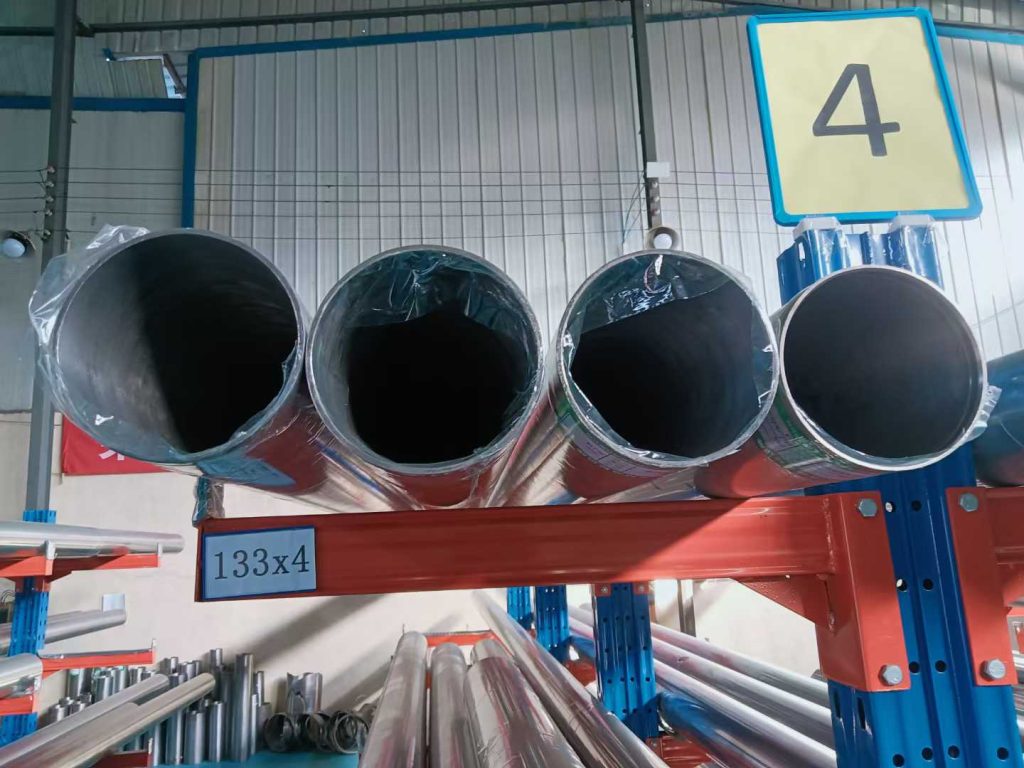
- Titanium Seamless Tubes
- Titanium Welded Tubes
- Titanium Heat Exchanger Tubes
- Custom Titanium Tubes
Available materials:
- Grade 1 Titanium
- Grade 2 Titanium
- Grade 5 Titanium Alloy
- Grade 7 Titanium
Products can be manufactured according to:
- ASTM B338
- Customer drawings
- Technical specifications
Frequently Asked Questions
Why are titanium tubes used in heat exchangers?
Titanium tubes are used because they provide excellent corrosion resistance, especially against seawater and chloride environments.
Are titanium tubes better than stainless steel tubes?
For highly corrosive environments, titanium usually provides better corrosion resistance and longer service life. Stainless steel may be preferred when initial cost is the main consideration.
What ASTM standard applies to titanium heat exchanger tubes?
ASTM B338 is one of the most common standards for titanium tubes used in heat exchangers and condensers.
Which titanium grade is commonly used for heat exchanger tubes?
Grade 2 titanium is the most commonly used grade because it provides an excellent balance of corrosion resistance, mechanical properties, and cost.
Conclusion
Titanium tubes have become an important solution for heat exchanger applications where corrosion resistance and long service life are critical.
Compared with traditional materials, titanium provides outstanding resistance to seawater, chloride environments, and aggressive industrial fluids.
For chemical plants, desalination facilities, power plants, and marine systems, selecting the right titanium tube can significantly improve equipment reliability and reduce long-term operating costs.