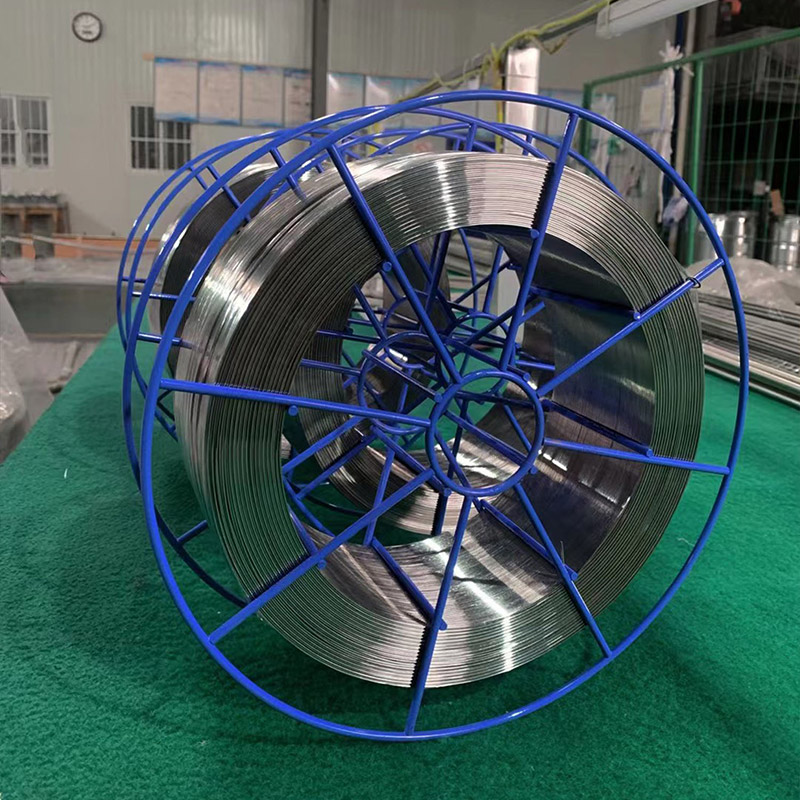

Titanium plate is widely used in chemical processing, marine engineering, aerospace manufacturing, medical equipment, and other industrial applications where corrosion resistance, mechanical strength, and lightweight performance are important.
However, purchasing titanium plate involves more than selecting a material grade and thickness.
Engineers and purchasing managers must also consider the operating environment, applicable material standards, dimensional tolerances, surface condition, fabrication requirements, and quality documentation.
For example, a titanium plate intended for chemical processing equipment may require different material properties and surface conditions than a plate used for CNC machining or aerospace components.
Selecting an unsuitable titanium grade or product specification can result in unnecessary material costs, fabrication difficulties, or premature equipment failure.
This guide explains how to choose the right titanium plate for industrial applications, including material grades, thickness selection, ASTM B265 requirements, surface finishes, and important purchasing considerations.
1. What Is Titanium Plate?
Titanium plate is a flat titanium product manufactured through processes such as hot rolling, cold rolling, heat treatment, and surface finishing.
Depending on the intended application, titanium plate can be manufactured from commercially pure titanium or titanium alloys.
Commercially pure titanium is commonly selected for applications requiring corrosion resistance and fabrication capability.
Titanium alloys, particularly Grade 5 (Ti-6Al-4V), are used when higher mechanical strength and a favorable strength-to-weight ratio are required.
Titanium flat products are commonly supplied as:
- Titanium plate
- Titanium sheet
- Titanium strip
- Custom-cut titanium blanks
Although the terms titanium plate and titanium sheet are sometimes used interchangeably in commercial quotations, they may have different dimensional and manufacturing requirements.
The applicable material standard and customer specification should be used to determine the correct product classification.
Common Industrial Applications
Titanium plate is used to manufacture:
- Chemical processing equipment
- Heat exchanger components
- Pressure vessels
- Marine equipment
- Electrochemical equipment
- Aerospace components
- Precision-machined parts
- Custom industrial components
The correct material grade and thickness depend on the mechanical and environmental requirements of each application.
2. How to Choose the Right Titanium Plate Grade
One of the first decisions when purchasing titanium plate is selecting the appropriate material grade.
Different titanium grades offer different combinations of strength, corrosion resistance, ductility, and fabrication characteristics.
The most commonly requested grades include Grade 1, Grade 2, Grade 5, Grade 7, and Grade 9.
Titanium Plate Grade Comparison
| Titanium Grade | Material Type | Main Characteristics | Typical Applications |
|---|---|---|---|
| Grade 1 | Commercially Pure Titanium | High ductility and excellent corrosion resistance | Chemical equipment and formed components |
| Grade 2 | Commercially Pure Titanium | Balance of strength, corrosion resistance, and weldability | Chemical processing, marine equipment, and heat exchangers |
| Grade 5 | Ti-6Al-4V Alloy | High strength and excellent strength-to-weight ratio | Aerospace, structural components, and precision machining |
| Grade 7 | Titanium-Palladium Alloy | Improved corrosion resistance in certain chemical environments | Specialized chemical processing equipment |
| Grade 9 | Ti-3Al-2.5V Alloy | Higher strength than commercially pure titanium with useful formability | Lightweight structures and specialized fabricated components |
Material selection should always consider the actual operating environment and engineering requirements.
Grade 1 Titanium Plate
Grade 1 is a commercially pure titanium grade known for its high ductility and excellent corrosion resistance.
It is particularly useful when the manufacturing process requires significant forming or shaping.
Typical applications include chemical equipment, fabricated components, and industrial products requiring good formability.
Grade 1 may be considered when corrosion resistance and forming capability are more important than maximum mechanical strength.
Grade 2 Titanium Plate
Grade 2 titanium plate is one of the most commonly specified commercially pure titanium products for industrial applications.
It offers a practical combination of:
- Excellent corrosion resistance
- Good mechanical strength
- Good weldability
- Good fabrication characteristics
- Low density
Grade 2 titanium plate is commonly used in chemical processing equipment, marine engineering, heat exchangers, and corrosion-resistant industrial components.
It is particularly attractive for equipment exposed to seawater and many chloride-containing environments.
However, corrosion resistance should always be evaluated against the actual chemical composition, concentration, temperature, and operating conditions.
For many general industrial applications requiring commercially pure titanium, Grade 2 is a practical starting point for material selection.
Grade 5 Titanium Plate (Ti-6Al-4V)
Grade 5 titanium is an alloy containing approximately 6% aluminum and 4% vanadium.
Compared with commercially pure titanium, Grade 5 provides significantly higher mechanical strength.
It is commonly selected for applications requiring:
- High mechanical strength
- Lightweight structural components
- Fatigue resistance
- Precision machining
- High-performance mechanical parts
Typical applications include aerospace components, industrial machinery, structural parts, and specialized engineering equipment.
Grade 5 is not automatically the most suitable material for every corrosion-resistant application.
If corrosion resistance and fabrication are the main requirements, commercially pure titanium may provide a more appropriate solution.
Grade 7 Titanium Plate
Grade 7 is commercially pure titanium containing a small addition of palladium.
The palladium addition improves corrosion resistance in certain chemical environments, particularly where the passive film on conventional titanium may be less stable.
Grade 7 is used in specialized chemical processing equipment where the corrosion resistance of Grade 2 may be insufficient.
However, the additional alloying element generally increases material cost.
Before selecting Grade 7, engineers should evaluate whether the operating environment requires its enhanced corrosion resistance.
3. How to Select the Correct Titanium Plate Thickness
Thickness selection is one of the most important considerations when purchasing titanium plate.
The required thickness depends on the application, mechanical loading, fabrication process, and dimensional requirements.
A titanium plate used as a machining blank may require additional thickness to allow for material removal.
A plate used for chemical equipment may require a thickness determined by pressure, temperature, structural loading, and applicable engineering design codes.
Common Titanium Plate Thickness Categories
| Thickness Range | Typical Product Description | Common Applications |
|---|---|---|
| Below 1 mm | Thin titanium sheet | Precision fabrication and formed components |
| 1–3 mm | Thin sheet or plate | Fabricated components and equipment covers |
| 3–10 mm | Medium-thickness plate | Chemical equipment and industrial fabrication |
| 10–30 mm | Thick titanium plate | Machining blanks and structural components |
| Above 30 mm | Heavy titanium plate | Large machined parts and specialized equipment |
These thickness categories are general commercial descriptions, not formal ASTM B265 product classification limits.
Important Considerations When Selecting Thickness
Mechanical strength
The plate must have sufficient thickness to withstand the required mechanical loads.
Operating pressure
Pressure-containing equipment requires engineering calculations based on the applicable design code.
Machining allowance
If the plate will be machined into a finished component, additional thickness may be required.
Fabrication requirements
Bending, forming, welding, and other fabrication processes can influence the required starting thickness.
Weight and material cost
Selecting unnecessarily thick material increases both material consumption and finished component weight.
For industrial equipment, the final thickness should be determined according to the actual engineering requirements rather than material price alone.
4. ASTM B265 Titanium Plate Specification
When purchasing titanium plate for international industrial projects, ASTM B265 is one of the most commonly referenced material specifications.
ASTM B265 is the standard specification for:
Titanium and Titanium Alloy Strip, Sheet, and Plate.
It covers annealed titanium and titanium alloy flat products and establishes requirements relating to chemical composition, mechanical properties, product dimensions, and testing.
The applicable requirements depend on the selected material grade and product form.
ASTM B265 includes commercially pure titanium grades and titanium alloys, including Grade 1, Grade 2, Grade 5, Grade 7, and Grade 9.
Why ASTM B265 Matters
When purchasing titanium plate, specifying ASTM B265 helps establish a common technical basis between the buyer and supplier.
It allows both parties to confirm:
- Material grade
- Chemical composition
- Mechanical property requirements
- Product dimensions
- Applicable dimensional tolerances
- Testing requirements
However, simply stating “ASTM B265 titanium plate” is not sufficient for a complete purchase specification.
The buyer should also identify the required material grade, standard edition, dimensions, surface condition, quantity, and any additional project-specific requirements.
Example Purchase Specification
A customer may specify:
Material: Titanium Grade 2
Standard: ASTM B265
Product: Titanium Plate
Thickness: 5 mm
Width: 1,000 mm
Length: 2,000 mm
Surface: Pickled
Quantity: 10 pieces
Documentation: Material Test Certificate
This information helps the supplier prepare a more accurate quotation and confirm manufacturing feasibility.
5. Titanium Plate Surface Finish: Which One Should You Choose?
Surface condition is another important factor when purchasing titanium plate.
Different surface finishes are suitable for different manufacturing processes and industrial applications.
The required surface condition should be specified before production.
Hot-Rolled Surface
Hot rolling is commonly used to manufacture thicker titanium plates.
Depending on the manufacturing process and subsequent treatment, the surface may contain oxide scale or exhibit a relatively rough appearance.
Hot-rolled titanium plate is commonly used for further processing, machining, or fabrication.
If the customer requires a clean surface, additional surface treatment may be necessary.
Pickled Surface
Pickling is a chemical surface treatment used to remove oxide scale and certain surface contamination.
Pickled titanium plate generally has a cleaner and more uniform appearance than untreated hot-rolled material.
It is commonly requested for industrial fabrication and chemical equipment.
However, a pickled surface does not automatically guarantee a particular surface roughness or cosmetic appearance.
Specific surface requirements should be agreed upon before production.
Cold-Rolled Surface
Cold rolling is commonly used to produce thinner titanium flat products with improved dimensional control and a relatively uniform surface.
Depending on the manufacturing route, subsequent annealing and surface treatment may be required.
Cold-rolled titanium sheet is commonly used for precision fabrication and applications requiring relatively thin material.
Machined Surface
Machining can be used when customers require specific thickness tolerances, surface conditions, or finished dimensions.
Machined titanium plate may be suitable for:
- CNC machining blanks
- Precision components
- Custom industrial parts
However, machining increases processing costs and material loss.
Customers should confirm whether a machined surface is necessary for the intended application.
Polished Surface
Polishing may be requested for applications requiring improved surface appearance or a specified surface roughness.
The required finish should be defined using measurable criteria where necessary.
For example, customers may specify a maximum surface roughness value rather than simply requesting a “smooth surface.”
Surface Finish Selection Guide
| Surface Condition | Typical Requirement |
|---|---|
| Hot Rolled | Further processing or machining |
| Pickled | Clean industrial fabrication surface |
| Cold Rolled | Thin flat products requiring dimensional control |
| Machined | Specific dimensions or machining allowance |
| Polished | Defined appearance or surface roughness |
Important: Surface finish alone does not determine corrosion resistance or suitability for a particular chemical environment.
Material grade, operating conditions, surface contamination, and fabrication quality must also be considered.
6. Titanium Plate Size and Dimensional Tolerances
When requesting a titanium plate quotation, customers should provide complete dimensional information.
The most important dimensions are:
- Thickness
- Width
- Length
- Quantity
For custom-cut plates, additional information may be required.
This includes:
- Cutting method
- Dimensional tolerances
- Edge condition
- Flatness requirements
- Surface condition
- Machining allowance
Example: Custom Titanium Plate
A customer requires a titanium plate with the following specifications:
| Parameter | Requirement |
|---|---|
| Material | Grade 2 Titanium |
| Thickness | 6 mm |
| Width | 500 mm |
| Length | 500 mm |
| Surface | Pickled |
| Quantity | 20 pieces |
| Standard | ASTM B265 |
Before confirming the order, the supplier should verify the applicable dimensional tolerances and whether additional cutting or machining is required.
Why Dimensional Tolerances Matter
A customer ordering titanium plate for general fabrication may accept standard mill tolerances.
However, a customer purchasing titanium plate for precision machining may require tighter dimensional control.
These requirements can affect:
- Manufacturing method
- Material utilization
- Processing time
- Production cost
- Delivery schedule
Therefore, customers should provide the required tolerances before the quotation is finalized.
7. Titanium Plate Weight Calculation
Titanium is considerably lighter than steel and nickel.
The density of commercially pure titanium is approximately 4.51 g/cm³.
The theoretical weight of a rectangular titanium plate can be calculated using the following formula:
Weight (kg) = Thickness (mm) × Width (mm) × Length (mm) × Density (g/cm³) ÷ 1,000,000
For commercially pure titanium, a density of approximately 4.51 g/cm³ can be used for preliminary calculations.
Example: Grade 2 Titanium Plate
Suppose a customer requires:
Thickness: 5 mm
Width: 1,000 mm
Length: 2,000 mm
The theoretical weight is:
5 × 1,000 × 2,000 × 4.51 ÷ 1,000,000
Theoretical weight = 45.1 kg per plate
For 10 pieces:
45.1 × 10 = 451 kg
The estimated total weight is approximately 451 kg.
Actual weight may vary due to dimensional tolerances, material grade, and manufacturing conditions.
For commercial quotations, customers should confirm whether the order will be priced according to theoretical weight, actual weight, or finished-piece quantity.
8. Titanium Plate Applications by Industry
Titanium plate is used across several industrial sectors.
However, different industries may require different material grades, manufacturing standards, and inspection procedures.
Chemical Processing Industry
Titanium plate is commonly used for manufacturing:
- Chemical reactors
- Storage tanks
- Heat exchanger components
- Corrosion-resistant equipment
- Process vessels
Commercially pure titanium, particularly Grade 2, is widely considered for equipment exposed to seawater, chloride-containing solutions, and certain oxidizing chemicals.
However, titanium is not universally resistant to every chemical environment.
Actual corrosion compatibility must be confirmed according to the chemical medium, concentration, temperature, and operating conditions.
Marine Engineering
Titanium plate is used in marine applications where resistance to seawater corrosion is important.
Typical applications include:
- Marine equipment components
- Seawater cooling systems
- Offshore equipment
- Corrosion-resistant fabricated parts
Grade 2 titanium is commonly considered for seawater applications.
Aerospace Manufacturing
Titanium alloys are used in aerospace applications because of their high strength-to-weight ratio.
Grade 5 titanium plate is commonly selected for structural and precision-machined components.
Aerospace projects may require additional material specifications, inspection procedures, traceability, and customer approvals beyond general industrial ASTM requirements.
Medical Equipment
Titanium materials are used in medical equipment because of their corrosion resistance and compatibility with certain medical applications.
However, titanium plate intended for implantable medical devices must meet the applicable medical material specifications and regulatory requirements.
General industrial Grade 5 plate should not automatically be treated as implant-grade material.
Industrial Machining
Titanium plate is also used as raw material for CNC-machined components.
Typical products include:
- Custom mechanical parts
- Industrial fixtures
- Precision components
- Lightweight structural parts
For machining applications, buyers should pay particular attention to material grade, plate thickness, flatness, surface condition, and machining allowance.
9. Titanium Plate vs Stainless Steel Plate
Titanium and stainless steel are both used in industrial equipment, but they offer different material characteristics.
| Property | Titanium Plate | Stainless Steel Plate |
|---|---|---|
| Density | Approximately 4.5 g/cm³ | Approximately 7.9–8.0 g/cm³ |
| Seawater Corrosion Resistance | Excellent for suitable grades and conditions | Depends on stainless steel grade and service conditions |
| Strength | Depends on titanium grade | Depends on stainless steel grade |
| Fabrication | Requires titanium-specific procedures | Established fabrication methods |
| Material Cost | Generally higher | Generally lower for common grades |
| Weight | Lower | Higher |
Titanium may be considered when corrosion resistance and weight reduction are important.
Stainless steel may provide a more economical solution for applications where its corrosion resistance and mechanical properties are sufficient.
The final selection should consider the complete operating environment and lifecycle cost.
10. How to Evaluate a Titanium Plate Supplier
Selecting a suitable titanium plate supplier involves more than comparing prices.
For industrial buyers, consistent material quality, clear technical communication, and reliable documentation are important.
Before placing an order, customers should consider the following factors.
Material Grade Verification
Confirm that the supplier can provide the required titanium grade.
For example:
- Grade 1
- Grade 2
- Grade 5
- Grade 7
- Grade 9
The material grade should be clearly identified in the quotation, purchase order, and inspection documents.
Applicable Manufacturing Standard
Confirm whether the material is required to comply with ASTM B265 or another applicable specification.
The required standard edition should be identified where necessary.
Material Test Certificate
Customers may request a Material Test Certificate (MTC) containing information such as:
- Material grade
- Heat or batch identification
- Chemical composition
- Mechanical test results
- Applicable material specification
The certificate should correspond to the actual material supplied.
Dimensional Inspection
For custom-cut titanium plates, dimensional inspection may be required before shipment.
Important inspection items may include:
- Thickness
- Width
- Length
- Flatness
- Surface condition
Additional Inspection Requirements
Depending on the application, customers may require additional testing or inspection.
Examples include:
- Ultrasonic examination
- Surface inspection
- Third-party inspection
- Additional mechanical testing
These requirements should be confirmed before production because they may affect the manufacturing process, cost, and delivery time.
11. Common Mistakes When Purchasing Titanium Plate
Several purchasing mistakes can lead to unnecessary costs or manufacturing problems.
Mistake 1: Selecting Grade 5 When Grade 2 Is Sufficient
Grade 5 titanium offers significantly higher strength than Grade 2.
However, not every industrial application requires this additional strength.
For corrosion-resistant equipment, Grade 2 may be more appropriate depending on the operating conditions and fabrication requirements.
Mistake 2: Ignoring Surface Requirements
Customers sometimes specify only the material grade and dimensions.
However, surface condition may affect subsequent fabrication, machining, and inspection.
The required surface finish should be confirmed before production.
Mistake 3: Not Specifying Dimensional Tolerances
A plate intended for general fabrication may have different dimensional requirements from a precision-machined component.
If tighter tolerances are required, they should be clearly stated in the purchase order.
Mistake 4: Choosing Material Based Only on Price
A lower material price does not necessarily result in a lower total project cost.
Buyers should also consider:
- Material utilization
- Processing costs
- Inspection requirements
- Transportation costs
- Equipment service life
Mistake 5: Not Confirming Material Certification
For industrial projects requiring material traceability, customers should confirm the required certification and inspection documentation before placing the order.
12. Titanium Plate Supply and Custom Manufacturing
Shaanxi Metres Metals Manufacturing Co., Ltd. supplies titanium materials and custom titanium products for industrial customers worldwide.
Our titanium product range includes:
- Titanium Plate
- Titanium Sheet
- Titanium Bar and Rod
- Titanium Tube
- Titanium Wire
- Titanium Forgings
- Custom Titanium Components
We support customer requirements for commercially pure titanium and titanium alloy materials.
Commonly requested grades include Grade 1, Grade 2, and Grade 5.
Other grades and specifications can be discussed according to project requirements.
Custom Titanium Plate Requirements
Customers can submit their requirements for:
- Material grade
- Plate thickness
- Width and length
- Quantity
- Surface condition
- Cutting requirements
- Machining requirements
- Applicable material standards
- Inspection documentation
Our team can review the technical requirements and provide a quotation based on the requested specifications and manufacturing feasibility.
13. How to Request a Titanium Plate Quotation
For a faster and more accurate quotation, please provide the following information.
| Required Information | Example |
|---|---|
| Product | Titanium Plate |
| Material Grade | Grade 2 |
| Standard | ASTM B265 |
| Thickness | 5 mm |
| Width | 1,000 mm |
| Length | 2,000 mm |
| Quantity | 10 pieces |
| Surface Condition | Pickled |
| Additional Requirements | MTC, dimensional inspection |
| Delivery Destination | Country or destination city |
If your project requires custom dimensions or machining, please provide the technical drawing.
For applications involving chemical processing, information about the operating environment may also help us understand your material requirements.
Request a Quote for Titanium Plate
Looking for a reliable titanium plate supplier for your industrial project?
Shaanxi Metres Metals Manufacturing Co., Ltd. supplies titanium plate, sheet, bar, tube, wire, and custom titanium components for international customers.
Whether you require commercially pure titanium plate, Grade 5 titanium alloy plate, or custom-cut titanium blanks, our team can review your specifications and provide a quotation.
Contact us with your material grade, dimensions, quantity, and technical requirements.
Website: www.metresmfg.com
14. Frequently Asked Questions About Titanium Plate
What Is the Most Common Titanium Plate Grade?
Grade 2 is one of the most commonly specified commercially pure titanium grades for industrial applications.
It offers a useful combination of corrosion resistance, mechanical strength, and fabrication characteristics.
Grade 5 is commonly selected when higher mechanical strength is required.
What Is ASTM B265 Titanium Plate?
ASTM B265 is a material specification covering annealed titanium and titanium alloy strip, sheet, and plate.
It establishes requirements for the applicable material grades and product forms.
Buyers should specify the required grade, dimensions, standard edition, and any additional project requirements.
What Is the Difference Between Titanium Plate and Titanium Sheet?
Titanium sheet generally refers to thinner flat products, while titanium plate generally refers to thicker products.
However, the exact classification depends on the applicable material specification and commercial requirements.
Buyers should always specify the actual thickness rather than relying only on the terms “plate” or “sheet.”
Is Grade 2 Titanium Plate Suitable for Chemical Processing?
Grade 2 titanium is widely used in chemical processing equipment because of its excellent corrosion resistance in many industrial environments.
However, its suitability depends on the actual chemical medium, concentration, temperature, and operating conditions.
Can Titanium Plate Be Cut to Custom Sizes?
Yes. Titanium plate can be cut or machined into custom dimensions using suitable manufacturing methods.
The available dimensions, cutting tolerances, and surface conditions should be confirmed with the supplier before production.
Can Titanium Plate Be Welded?
Yes. Titanium plate can be welded using appropriate welding procedures.
However, titanium welding requires effective shielding from atmospheric contamination.
The welding procedure should be selected according to the material grade, plate thickness, joint design, and application requirements.
How Do I Calculate Titanium Plate Weight?
For a rectangular plate, theoretical weight can be calculated using thickness, width, length, and material density.
For commercially pure titanium, a density of approximately 4.51 g/cm³ can be used for preliminary weight calculations.
Actual weight may vary depending on the material grade and dimensional tolerances.
What Information Should I Provide When Ordering Titanium Plate?
Provide the material grade, applicable standard, thickness, width, length, quantity, surface condition, and required inspection documents.
For custom components, a technical drawing is recommended.
Conclusion
Choosing the right titanium plate requires careful consideration of material grade, thickness, manufacturing standard, surface condition, and intended application.
Grade 2 titanium plate is commonly selected for industrial applications requiring corrosion resistance and fabrication capability, while Grade 5 titanium plate is suitable for applications requiring higher mechanical strength.
ASTM B265 provides a recognized technical specification for titanium and titanium alloy flat products.
However, buyers should also clearly define dimensions, tolerances, surface condition, inspection requirements, and material certification.
By providing complete technical requirements and working with an experienced titanium material supplier, industrial buyers can improve procurement efficiency and reduce the risk of material selection or manufacturing problems.
For titanium plate, sheet, and custom titanium component inquiries, contact Shaanxi Metres Metals Manufacturing Co., Ltd. with your specifications and drawings.