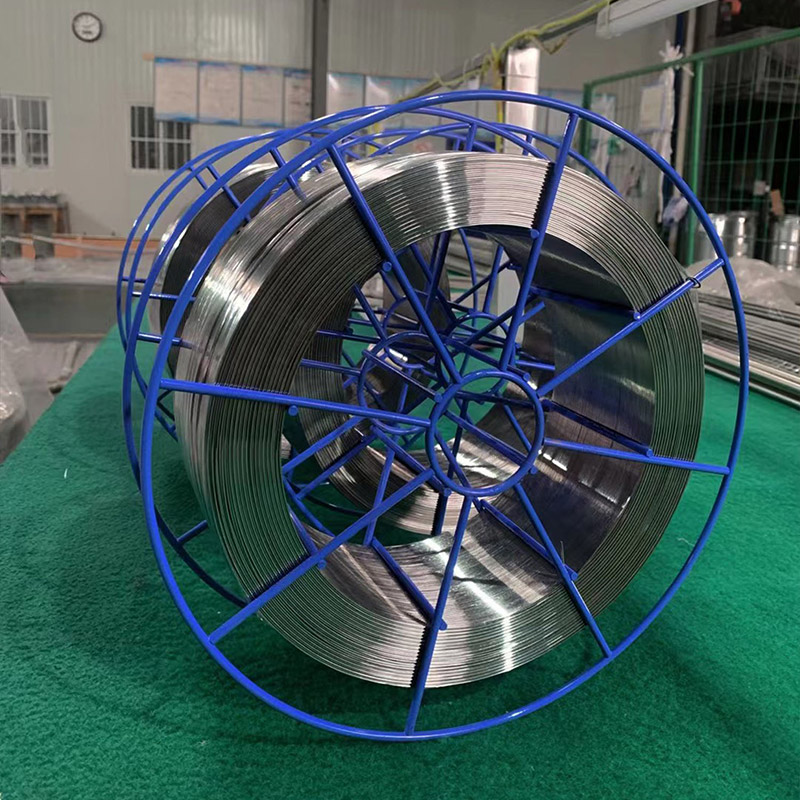

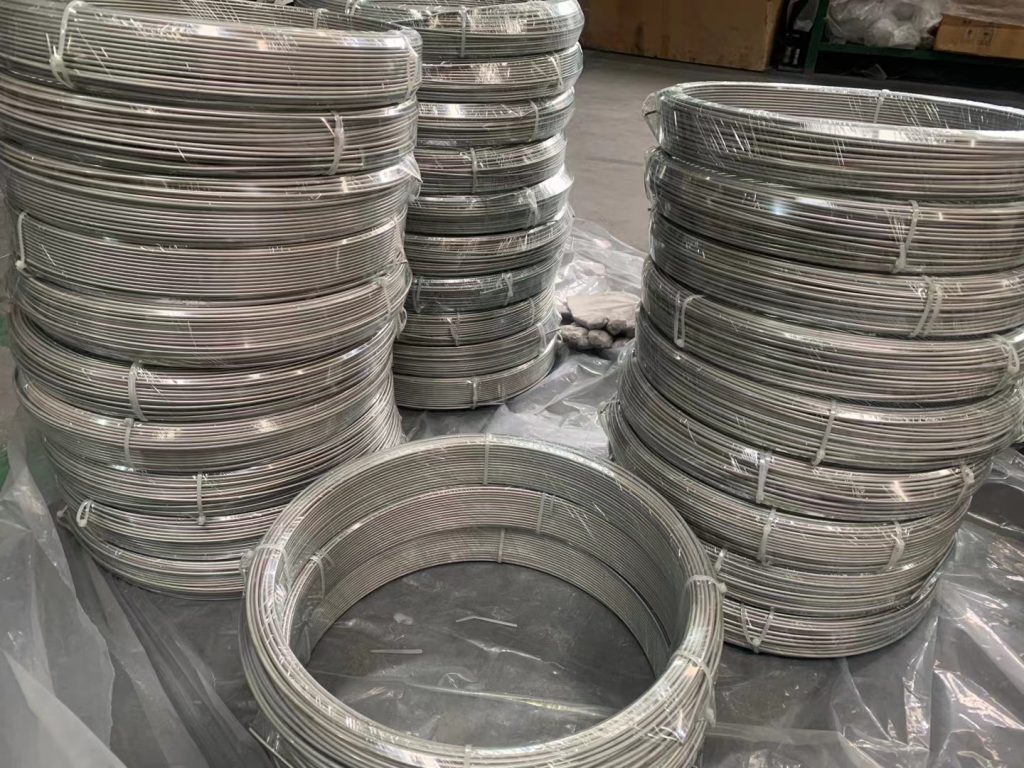
Chemical processing industries require materials that can withstand highly corrosive environments, elevated temperatures, and continuous operating conditions.
Equipment such as heat exchangers, reactors, piping systems, and processing vessels often operate under challenging conditions involving:
- Strong chemicals
- Alkaline solutions
- High temperatures
- Pressure cycles
- Long-term exposure
In these environments, conventional materials may suffer from corrosion, reduced service life, and frequent maintenance.
Nickel tubes are widely used in chemical processing applications because of their:
- Excellent corrosion resistance
- High temperature stability
- Good mechanical properties
- Resistance to alkaline environments
- Long service life
This article explains nickel tube properties, common grades, ASTM standards, and industrial applications.
Why Nickel Tubes Are Used in Chemical Processing
Material selection is critical in chemical processing equipment.
A tube failure can cause:
- Production interruption
- Equipment damage
- Safety risks
- High replacement costs
Nickel tubes provide reliable performance in environments where corrosion resistance is essential.
The main advantages include:
1. Excellent Corrosion Resistance
The biggest advantage of nickel tubes is their outstanding corrosion resistance.
Commercially pure nickel provides excellent resistance to many aggressive environments, including:
- Caustic alkalis
- Neutral salt solutions
- Fluorine compounds
- Chemical processing fluids
This makes nickel tubes suitable for equipment exposed to corrosive chemicals.
2. Superior Resistance to Alkaline Solutions
Nickel is especially valued in industries using strong alkaline chemicals.
Nickel tubes perform well in:
- Sodium hydroxide (NaOH)
- Potassium hydroxide (KOH)
- Caustic evaporation systems
Typical applications include:
- Chemical evaporators
- Alkali processing equipment
- Heat transfer systems
3. High Temperature Performance
Many chemical processes operate at elevated temperatures.
Nickel tubes maintain:
- Mechanical stability
- Corrosion resistance
- Dimensional reliability
This makes them suitable for:
- High-temperature reactors
- Heat exchangers
- Chemical processing systems
4. Excellent Thermal and Electrical Conductivity
Compared with many corrosion-resistant alloys, commercially pure nickel provides good:
- Thermal conductivity
- Electrical conductivity
This benefits applications involving:
- Heat transfer
- Electrical equipment
- Specialized industrial systems
Common Nickel Tube Grades
The most common commercially pure nickel tube grades are:
- Nickel 200
- Nickel 201
Both grades are widely used in industrial applications.
Nickel 200 Tube
Overview
Nickel 200 is a commercially pure nickel grade containing approximately 99% nickel.
It provides an excellent balance of:
- Corrosion resistance
- Fabrication capability
- Electrical properties
- Mechanical performance
Nickel 200 Tube Advantages
Excellent Chemical Resistance
Nickel 200 tubes perform well in:
- Alkali solutions
- Salt solutions
- Fluorine environments
Excellent Weldability
Nickel 200 tubes can be fabricated using common industrial welding processes.
Suitable for:
- Piping systems
- Heat exchangers
- Process equipment
Nickel 200 Tube Applications
Common applications include:
Chemical Industry
- Reactors
- Heat exchangers
- Process piping
- Storage systems
Electrical Industry
- Conductive components
- Battery-related equipment
Industrial Equipment
- Corrosion-resistant tubing systems
Nickel 201 Tube
Overview
Nickel 201 is a low-carbon version of Nickel 200.
The reduced carbon content improves performance during long-term exposure to elevated temperatures.
Nickel 201 Tube Advantages
Compared with Nickel 200:
- Better resistance to carbon precipitation
- Improved ductility after heating
- Better high-temperature reliability
Nickel 201 Tube Applications
Common applications:
- High-temperature chemical equipment
- Caustic evaporation systems
- Heat treatment equipment
- Specialized process tubing
Nickel 200 Tube vs Nickel 201 Tube
| Property | Nickel 200 Tube | Nickel 201 Tube |
|---|---|---|
| Nickel Content | ≥99% | ≥99% |
| Carbon Content | Higher | Lower |
| Corrosion Resistance | Excellent | Excellent |
| High Temperature Performance | Good | Better |
| Weldability | Excellent | Excellent |
| Chemical Processing | Excellent | Excellent |
Selection depends mainly on operating temperature and service conditions.
ASTM Standards for Nickel Tubes
When purchasing nickel tubes for industrial applications, customers often require international standards.
ASTM B161
ASTM B161 is the standard specification for:
Nickel Seamless Tube and Pipe
It covers requirements for:
- Chemical composition
- Mechanical properties
- Dimensions
- Testing
Nickel tubes supplied according to ASTM B161 are commonly used in chemical and industrial applications.
Nickel Tube Product Types
Nickel Seamless Tube
Advantages:
- Higher reliability
- Better pressure resistance
- Suitable for demanding applications
Applications:
- Chemical equipment
- Heat exchangers
- High-pressure systems
Nickel Welded Tube
Advantages:
- Cost-effective
- Suitable for large-scale applications
Applications:
- Industrial piping
- Heat transfer equipment
- General chemical systems
Nickel Tube Applications in Chemical Processing
1. Heat Exchangers
Nickel tubes are used in heat exchangers because they provide:
- Corrosion resistance
- Stable heat transfer performance
- Long service life
Applications:
- Chemical cooling systems
- Process heaters
- Evaporators
2. Chemical Reactors
Nickel tubing is suitable for reactors exposed to:
- Corrosive chemicals
- Alkaline solutions
- High temperatures
3. Process Piping
Nickel tubes are used for:
- Chemical transportation
- Corrosive fluid systems
- Specialized pipelines
4. Alkali Processing Equipment
Nickel is one of the preferred materials for:
- Caustic soda equipment
- Alkali concentration systems
Nickel Tube vs Stainless Steel Tube
| Property | Nickel Tube | Stainless Steel Tube |
|---|---|---|
| Chemical Resistance | Excellent | Depends on grade |
| Alkali Resistance | Excellent | Limited |
| High Temperature Stability | Excellent | Good |
| Electrical Conductivity | Higher | Lower |
| Material Cost | Higher | Lower |
For aggressive chemical environments, nickel tubes often provide longer service life compared with conventional stainless steel.
Nickel Tube vs Titanium Tube
| Property | Nickel Tube | Titanium Tube |
|---|---|---|
| Alkali Resistance | Excellent | Moderate |
| Chloride Resistance | Good | Excellent |
| Chemical Applications | Excellent | Excellent |
| Seawater Applications | Good | Excellent |
| High Temperature | Excellent | Good |
Material selection depends on the specific chemical environment.
How to Select the Right Nickel Tube?
Before purchasing nickel tubes, consider:
1. Chemical Environment
Evaluate:
- Chemical composition
- Corrosive media
- Concentration
- Temperature
2. Operating Temperature
For high-temperature applications:
Consider:
- Nickel 201
- Required carbon content
- Long-term exposure conditions
3. Tube Specification
Confirm:
- Outer diameter
- Wall thickness
- Length
- Seamless or welded type
4. Certification Requirements
Customers may require:
- ASTM B161 certificate
- Material Test Certificate (MTC)
- Chemical analysis
- Mechanical testing
- Dimensional inspection
Nickel Tube Manufacturing Capability
Shaanxi Metres Metals Manufacturing Co., Ltd. supplies nickel tubes and custom nickel products for industrial applications worldwide.
Our nickel product range includes:
- Nickel Seamless Tubes
- Nickel Welded Tubes
- Nickel Plates
- Nickel Bars
- Nickel Wires
- Custom Nickel Components
Available grades:
- Nickel 200
- Nickel 201
Products can be supplied according to:
- ASTM standards
- Customer drawings
- Technical requirements
Frequently Asked Questions
What are nickel tubes used for?
Nickel tubes are widely used in chemical processing, heat exchangers, reactors, and corrosion-resistant piping systems.
What ASTM standard applies to nickel tubes?
ASTM B161 is commonly used for nickel seamless tubes and pipes.
Is Nickel 200 tube corrosion resistant?
Yes. Nickel 200 provides excellent corrosion resistance, especially in alkaline and chemical environments.
What is the difference between Nickel 200 and Nickel 201 tube?
Nickel 201 has lower carbon content and provides improved performance during long-term high-temperature service.
Conclusion
Nickel tubes are an important solution for chemical processing applications where corrosion resistance, thermal stability, and long service life are required.
Nickel 200 and Nickel 201 tubes provide excellent performance in demanding industrial environments, especially where alkaline chemicals and corrosive media are involved.
By selecting the correct nickel grade, tube specification, and manufacturing standard, engineers can improve equipment reliability and reduce long-term maintenance costs.