
Grade 2 titanium plate is one of the most widely used commercially pure titanium products in industrial manufacturing.
Known for its excellent corrosion resistance, good mechanical strength, weldability, and relatively low density, Grade 2 titanium is widely used in chemical processing, marine engineering, heat exchangers, desalination plants, and other demanding industrial applications.
When purchasing titanium plate for international projects, engineers and procurement managers frequently specify ASTM B265 Grade 2 titanium plate to establish the required material quality and technical requirements.
However, selecting the right titanium plate involves more than simply specifying a grade and standard.
Buyers should also consider chemical composition, mechanical properties, thickness, dimensions, surface condition, manufacturing requirements, and material certification.
This guide provides a practical overview of ASTM B265 Grade 2 titanium plate to help engineers, purchasing managers, and industrial manufacturers make informed material selection and purchasing decisions.
1. What Is Grade 2 Titanium Plate?
Grade 2 titanium is a commercially pure, unalloyed titanium grade identified by:
- Material Grade: Grade 2
- UNS Number: R50400
- Material Type: Commercially Pure Titanium (CP Titanium)
- ASTM Plate Specification: ASTM B265
Unlike titanium alloys such as Grade 5 (Ti-6Al-4V), Grade 2 does not rely on aluminum or vanadium alloying additions to achieve its properties.
Instead, it provides a practical balance of corrosion resistance, mechanical strength, ductility, and fabrication performance.
Grade 2 is particularly attractive for applications where corrosion resistance and ease of fabrication are more important than maximum mechanical strength.
Key Characteristics
- Excellent corrosion resistance in many industrial environments
- Outstanding resistance to seawater and many chloride solutions
- Good mechanical strength
- Good ductility and formability
- Excellent weldability when proper procedures are followed
- Relatively low density
- Good performance in many chemical processing applications
Because of these characteristics, Grade 2 titanium plate is widely selected for corrosion-resistant industrial equipment.
2. ASTM B265 Grade 2 Titanium Plate Specification
ASTM B265 is the standard specification for:
Titanium and Titanium Alloy Strip, Sheet, and Plate.
It covers annealed titanium and titanium alloy flat products and establishes requirements for material composition, mechanical properties, and applicable product testing.
Grade 2 titanium plate under this specification is identified as UNS R50400.
The current ASTM edition is ASTM B265-25.
What Does ASTM B265 Cover?
The specification addresses requirements including:
- Chemical composition
- Mechanical properties
- Material grade identification
- Product dimensions and applicable tolerances
- Testing requirements
- Product quality requirements
For industrial purchasing, ASTM B265 provides a recognized technical reference between manufacturers, suppliers, and customers.
Why Specify ASTM B265?
Using the correct ASTM specification helps buyers establish consistent requirements for titanium plate.
For example, a purchase order may specify:
Material: Grade 2 Titanium
Standard: ASTM B265-25
UNS Number: R50400
Product Form: Titanium Plate
Condition: Annealed, where required
Surface: Pickled
Dimensions: As specified by the customer
Documentation: Material Test Certificate (MTC)
The exact requirements should be agreed upon between the buyer and supplier before production.
3. Grade 2 Titanium Plate Chemical Composition
The chemical composition of Grade 2 titanium is carefully controlled because small amounts of interstitial elements can significantly influence mechanical properties.
The principal element is titanium, with limited amounts of oxygen, iron, nitrogen, carbon, and hydrogen.
Typical Chemical Composition Limits
| Element | Maximum Content (wt.%) |
|---|---|
| Carbon (C) | 0.08 |
| Iron (Fe) | 0.30 |
| Oxygen (O) | 0.25 |
| Nitrogen (N) | 0.03 |
| Hydrogen (H) | 0.015 |
| Titanium (Ti) | Balance |
These are commonly referenced Grade 2 composition limits. The applicable ASTM edition and purchase specification should govern final acceptance.
Why Chemical Composition Matters
Chemical composition directly influences:
- Tensile strength
- Yield strength
- Ductility
- Formability
- Weldability
- Corrosion performance
For example, oxygen is an important strength-controlling interstitial element in commercially pure titanium.
Increasing oxygen content generally increases strength but reduces ductility.
This is one reason why chemical composition must be verified rather than relying only on the material’s commercial designation.
4. Grade 2 Titanium Plate Mechanical Properties
Grade 2 titanium provides a useful balance of mechanical strength and ductility.
Typical mechanical property requirements commonly referenced for annealed Grade 2 plate include:
| Mechanical Property | Typical Requirement |
|---|---|
| Minimum Tensile Strength | 345 MPa |
| Minimum Yield Strength | 275 MPa |
| Minimum Elongation | 20% |
| Density | Approximately 4.51 g/cm³ |
Actual acceptance requirements may depend on product thickness, material condition, and the applicable edition of ASTM B265.
The material test certificate should be used to verify the actual test results for the supplied material.
Why Mechanical Properties Matter
For chemical processing equipment, titanium plate must withstand the mechanical requirements of the equipment design.
For example:
- Reactors require appropriate structural strength.
- Pressure vessels require engineering-based thickness calculations.
- Heat exchangers require dimensional stability and suitable mechanical performance.
- Fabricated components may require sufficient ductility for forming and welding.
Selecting Grade 2 titanium provides a useful combination of strength and corrosion resistance for many industrial applications.
5. Corrosion Resistance of Grade 2 Titanium Plate
One of the main reasons manufacturers choose Grade 2 titanium plate is its excellent corrosion resistance.
Titanium naturally forms a thin, stable, and protective oxide film on its surface.
This passive film provides strong protection in many corrosive environments.
Seawater and Marine Environments
Grade 2 titanium is widely used in seawater applications because of its outstanding resistance to seawater corrosion.
Typical applications include:
- Marine heat exchangers
- Seawater cooling systems
- Desalination equipment
- Offshore components
- Condensers
Compared with conventional stainless steel grades, titanium can provide substantially better resistance to many seawater corrosion mechanisms.
Chloride-Containing Solutions
Titanium Grade 2 offers excellent resistance to many aqueous chloride environments.
This makes it useful for:
- Chemical processing equipment
- Brine systems
- Chloride-containing process equipment
- Industrial cooling systems
Chemical Processing Environments
Grade 2 titanium is also used in many chemical processing applications involving oxidizing environments and selected industrial chemicals.
However, titanium is not universally resistant to all acids and chemicals.
Certain reducing acids, particularly hydrofluoric acid and fluoride-containing environments, can attack titanium.
Material compatibility must therefore be evaluated based on:
- Chemical composition
- Concentration
- Operating temperature
- Contaminants
- Flow conditions
For critical equipment, corrosion testing or consultation with a corrosion specialist may be necessary.
6. Common Sizes and Thicknesses of Grade 2 Titanium Plate
Grade 2 titanium plate is available in various thicknesses, widths, and lengths.
The required dimensions depend on the intended application and manufacturing process.
Common Commercial Thickness Ranges
| Thickness Range | Typical Product Application |
|---|---|
| 0.5–1 mm | Thin sheet and precision fabrication |
| 1–3 mm | Industrial sheet and formed components |
| 3–6 mm | General industrial plate and equipment fabrication |
| 6–12 mm | Chemical equipment and structural components |
| 12–25 mm | Heavy industrial components and machining blanks |
| Above 25 mm | Specialized thick plate and machining applications |
These are indicative commercial thickness categories, not guaranteed stock sizes or ASTM classification boundaries.
Actual availability depends on the manufacturer, production route, and order quantity.
Common Width and Length Requirements
Customers may request:
- Standard mill dimensions
- Custom-cut dimensions
- CNC machining blanks
- Special plate dimensions
For example:
Example 1:
- Grade: Grade 2
- Thickness: 3 mm
- Width: 1,000 mm
- Length: 2,000 mm
Example 2:
- Grade: Grade 2
- Thickness: 6 mm
- Width: 1,220 mm
- Length: 2,440 mm
Example 3:
- Grade: Grade 2
- Thickness: 10 mm
- Width: 1,500 mm
- Length: 3,000 mm
These are example purchasing dimensions. Customers should confirm availability and dimensional tolerances before placing an order.
7. Grade 2 Titanium Plate Surface Finishes
Surface condition is an important purchasing consideration.
Different applications may require different surface finishes depending on fabrication, machining, and appearance requirements.
Hot-Rolled Surface
Hot-rolled titanium plate is produced through rolling at elevated temperatures.
Depending on subsequent processing, the surface may contain oxide scale or require additional treatment.
Common applications include:
- Industrial fabrication
- Further machining
- General equipment manufacturing
Pickled Surface
Pickling removes oxide scale and certain surface contaminants through controlled chemical treatment.
Pickled titanium plate is commonly used for industrial fabrication and corrosion-resistant equipment.
Cold-Rolled Surface
Cold-rolled titanium sheet and thin plate generally offer improved dimensional control and a more uniform surface appearance.
They are suitable for precision fabrication and applications requiring thinner flat products.
Machined Surface
Machining can be used to achieve specific dimensions and surface conditions.
This option is useful for:
- CNC machining blanks
- Precision components
- Custom industrial parts
Polished Surface
Polishing is used when a particular appearance or surface roughness is required.
Customers should specify the required surface condition rather than simply requesting a good finish.
8. Grade 2 Titanium Plate Applications
Grade 2 titanium plate is widely used in industries where corrosion resistance, fabrication performance, and long-term reliability are important.
Chemical Processing Industry
Grade 2 titanium plate is commonly used for:
- Chemical reactors
- Storage tanks
- Heat exchangers
- Process vessels
- Corrosion-resistant equipment
It is particularly useful in suitable chloride-containing and oxidizing chemical environments.
Marine Engineering
Titanium’s excellent seawater resistance makes Grade 2 a popular choice for marine applications.
Typical applications include:
- Seawater cooling equipment
- Marine heat exchangers
- Offshore equipment
- Desalination systems
- Shipboard components
Power Generation
Grade 2 titanium is used in certain power generation applications where corrosion resistance is important.
Examples include:
- Condensers
- Cooling systems
- Heat exchanger components
Electrochemical Industry
Titanium plate is also used in certain electrochemical applications.
Depending on the design, it may serve as:
- Structural components
- Equipment supports
- Process components
- Specialized fabricated parts
Specific electrode applications may require additional coatings or specialized material specifications.
Industrial Manufacturing
Grade 2 titanium plate can also be used as raw material for:
- CNC-machined components
- Custom equipment parts
- Corrosion-resistant structures
- Fabricated industrial products
9. Grade 2 Titanium Plate vs Grade 1 Titanium Plate
Grade 1 and Grade 2 are both commercially pure titanium grades.
However, they have different mechanical characteristics.
| Property | Grade 1 | Grade 2 |
|---|---|---|
| Material Type | Commercially Pure Titanium | Commercially Pure Titanium |
| Strength | Lower | Higher |
| Ductility | Higher | Good |
| Corrosion Resistance | Excellent | Excellent |
| Weldability | Excellent | Excellent |
| Typical Application | Forming and specialized fabrication | General industrial equipment |
Grade 1 is often preferred when maximum formability is required.
Grade 2 is generally selected when a higher strength level is needed while maintaining excellent corrosion resistance.
For many chemical processing and marine applications, Grade 2 provides a practical balance of properties.
10. Grade 2 Titanium Plate vs Grade 5 Titanium Plate
Grade 2 and Grade 5 are designed for different engineering requirements.
| Property | Grade 2 | Grade 5 |
|---|---|---|
| Material Type | Commercially Pure Titanium | Ti-6Al-4V Alloy |
| Strength | Moderate | High |
| Corrosion Resistance | Excellent in many industrial environments | Excellent in many environments |
| Ductility | Good | Lower than Grade 2 |
| Weldability | Excellent | Requires more specialized procedures |
| Typical Applications | Chemical and marine equipment | Aerospace and structural components |
When Should You Choose Grade 2?
Choose Grade 2 when:
- Corrosion resistance is the main priority.
- Good weldability is required.
- Industrial fabrication is involved.
- The application requires commercially pure titanium.
When Should You Choose Grade 5?
Choose Grade 5 when:
- Higher mechanical strength is required.
- Weight reduction is important.
- Structural performance is critical.
- Precision-machined components are needed.
Selecting Grade 5 simply because it has higher strength may unnecessarily increase material and processing costs when Grade 2 is sufficient.
11. How to Calculate Grade 2 Titanium Plate Weight
Titanium has a density of approximately 4.51 g/cm³.
For preliminary weight calculations, the following formula can be used:
Weight (kg) = Thickness (mm) × Width (mm) × Length (mm) × 4.51 ÷ 1,000,000
Calculation Example
A customer requires one Grade 2 titanium plate with:
- Thickness: 5 mm
- Width: 1,000 mm
- Length: 2,000 mm
Calculation:
5 × 1,000 × 2,000 × 4.51 ÷ 1,000,000
Theoretical Weight = 45.1 kg
For 10 pieces:
45.1 × 10 = 451 kg
This calculation is useful for preliminary quotation and shipping estimates.
Actual weight may vary depending on dimensional tolerances and manufacturing conditions.
Buyers should also confirm whether the supplier calculates the commercial price based on theoretical weight, actual weight, or finished-piece quantity.
12. Quality Inspection and Material Certification
For international industrial procurement, material certification and traceability are important.
When purchasing ASTM B265 Grade 2 titanium plate, buyers may request:
Material Test Certificate (MTC)
The MTC may include:
- Material grade
- ASTM specification
- Heat number
- Chemical composition
- Mechanical test results
- Material condition
Dimensional Inspection
Dimensional inspection may include:
- Thickness
- Width
- Length
- Flatness
- Dimensional tolerances
Surface Inspection
Surface inspection helps identify visible defects or conditions that do not meet the agreed requirements.
Additional Testing
Depending on the application, buyers may require:
- Ultrasonic testing
- Third-party inspection
- Additional mechanical testing
- Special project inspection documentation
These requirements should be confirmed before production and quotation.
13. How to Choose a Reliable Grade 2 Titanium Plate Supplier
Choosing a titanium supplier is not simply about finding the lowest price.
Industrial buyers should evaluate several important factors.
Material Quality
Confirm that the supplier can provide Grade 2 titanium plate with the required chemical composition and mechanical properties.
Standard Compliance
Confirm that the material is supplied according to the specified edition of ASTM B265.
Documentation
Ask whether the supplier can provide:
- Material Test Certificate
- Chemical composition report
- Mechanical test results
- Dimensional inspection records
Customization Capability
Check whether the supplier can meet your requirements for:
- Thickness
- Width
- Length
- Surface finish
- Cutting
- Machining
Technical Communication
A professional supplier should be able to review drawings, clarify technical requirements, and confirm manufacturing feasibility before accepting an order.
Delivery and Packaging
For international orders, confirm packaging, shipping method, delivery schedule, and export documentation requirements.
14. Grade 2 Titanium Plate Supply
Shaanxi Metres Metals Manufacturing Co., Ltd. supplies titanium materials and custom titanium products for industrial customers worldwide.
Our titanium product range includes:
- Grade 1 Titanium Plate
- Grade 2 Titanium Plate
- Grade 5 Titanium Plate
- Titanium Sheet
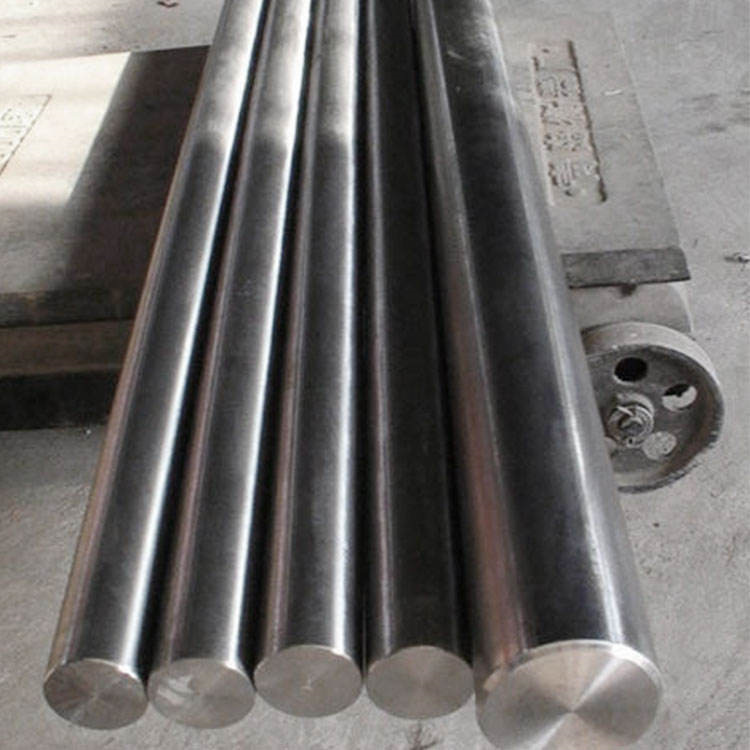
- Titanium Bar and Rod
- Titanium Tube
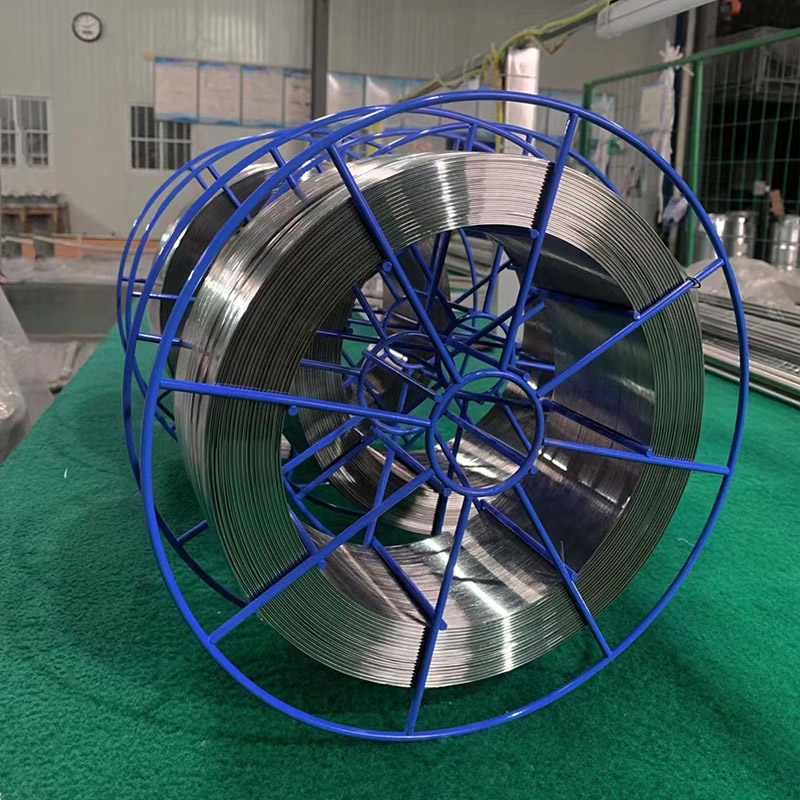
- Titanium Wire
- Custom Titanium Components
We support customer requirements for different dimensions, product forms, and technical specifications.
For Grade 2 titanium plate inquiries, customers can provide:
- Required thickness
- Width and length
- Quantity
- ASTM specification
- Surface condition
- Inspection requirements
- Delivery destination
Our team can review the specifications and provide a quotation according to the requested requirements and production feasibility.
15. Frequently Asked Questions
What Is ASTM B265 Grade 2 Titanium Plate?
It is commercially pure Grade 2 titanium plate supplied according to ASTM B265, the specification covering titanium and titanium alloy strip, sheet, and plate.
Its UNS designation is R50400.
Is Grade 2 Titanium the Same as UNS R50400?
Yes. UNS R50400 is the designation associated with Grade 2 commercially pure titanium.
Is Grade 2 Titanium Plate Corrosion Resistant?
Yes. Grade 2 titanium provides excellent corrosion resistance in many industrial environments, particularly seawater and many chloride-containing solutions.
However, chemical compatibility should be evaluated for the actual operating conditions.
What Is the Difference Between Grade 2 and Grade 2H Titanium?
Both are commercially pure titanium with the same UNS designation, R50400.
Grade 2H has a higher guaranteed minimum ultimate tensile strength of 58 ksi (400 MPa), compared with conventional Grade 2.
Grade 2H is particularly relevant to certain pressure-vessel applications.
What Is the Density of Grade 2 Titanium Plate?
The approximate density of Grade 2 titanium is 4.51 g/cm³.
This makes it significantly lighter than common stainless steel.
What Is the Common Thickness of Grade 2 Titanium Plate?
Available thicknesses depend on the manufacturer and production route.
Customers should provide their required thickness, width, and length to confirm availability.
Can Grade 2 Titanium Plate Be Welded?
Yes. Grade 2 titanium has excellent weldability when suitable welding procedures and adequate shielding from atmospheric contamination are used.
What Is the Applicable ASTM Standard for Grade 2 Titanium Plate?
ASTM B265 is the commonly specified standard for Grade 2 titanium strip, sheet, and plate.
How Can I Request a Grade 2 Titanium Plate Quotation?
Provide the material grade, standard, dimensions, quantity, surface requirements, and any additional inspection or certification requirements.
Technical drawings are recommended for custom-cut or machined products.
Conclusion
ASTM B265 Grade 2 titanium plate is an important engineering material for industries requiring excellent corrosion resistance, good mechanical strength, and reliable fabrication performance.
With its commercially pure titanium composition and practical balance of properties, Grade 2 is widely used in chemical processing, marine engineering, heat exchangers, desalination systems, and industrial manufacturing.
When purchasing Grade 2 titanium plate, buyers should carefully confirm the applicable ASTM specification, chemical composition, mechanical properties, dimensions, surface condition, and material certification.
Selecting the right titanium plate and working with a reliable supplier can help improve equipment performance, reduce procurement risks, and achieve long-term value.
Looking for ASTM B265 Grade 2 titanium plate?
Contact Shaanxi Metres Metals Manufacturing Co., Ltd. with your required dimensions, quantity, and technical specifications.
Our team will be pleased to review your inquiry and provide a quotation for your project.