
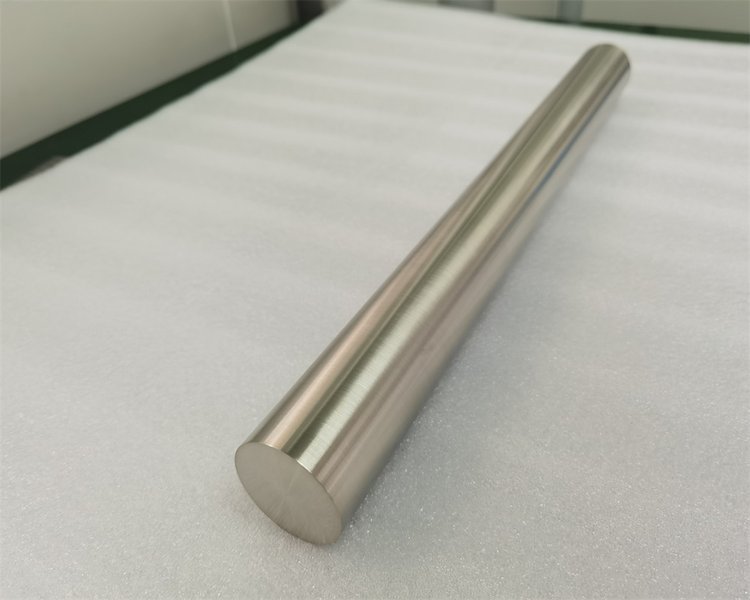
Nickel bars are widely used in industries where excellent corrosion resistance, electrical conductivity, and stable mechanical performance are required.
Among commercially pure nickel materials, ASTM B160 nickel bar is one of the most commonly specified products for industrial applications.
Nickel bars manufactured according to ASTM B160 are widely used in:
- Chemical processing equipment
- Electrical components
- Battery systems
- Marine applications
- Precision machining
- Corrosion-resistant industrial parts
When selecting nickel bars, engineers and purchasing teams usually consider:
- Material grade
- Chemical composition
- Mechanical properties
- Operating environment
- Machining requirements
- Certification requirements
This guide explains ASTM B160 nickel bar specifications, available grades, applications, and how to select the right nickel bar for your project.
What Is ASTM B160 Nickel Bar?
ASTM B160 is the standard specification for:
Nickel Rod and Bar
This standard covers commercially pure nickel bars used for industrial applications.
ASTM B160 defines requirements including:
- Chemical composition
- Mechanical properties
- Dimensions and tolerances
- Heat treatment
- Surface condition
- Testing requirements
Nickel bars supplied according to ASTM B160 provide consistent material quality and are widely accepted in international engineering projects.
Common Nickel Grades Under ASTM B160
The most common grades covered by ASTM B160 include:
- Nickel 200
- Nickel 201
Both grades are commercially pure nickel materials.
Although they have similar properties, the main difference is carbon content.
Nickel 200 Bar
What Is Nickel 200?
Nickel 200 is a commercially pure nickel grade containing approximately 99% nickel.
It provides an excellent combination of:
- Corrosion resistance
- Electrical conductivity
- Thermal conductivity
- Ductility
- Fabrication performance
Advantages of Nickel 200 Bar
Excellent Corrosion Resistance
Nickel 200 performs well in:
- Alkali solutions
- Neutral salt solutions
- Fluorine environments
- Marine atmospheres
Excellent Electrical Properties
Nickel 200 has good electrical conductivity, making it suitable for:
- Electrical components
- Battery applications
- Electronic parts
Good Machining and Fabrication Performance
Nickel 200 bars can be processed through:
- Turning
- Milling
- Drilling
- Welding
- Forming
Nickel 200 Bar Applications
Common applications include:
Chemical Processing
- Pumps
- Valves
- Shafts
- Reactor components
Electrical Industry
- Conductive components
- Battery parts
- Electronic equipment
Industrial Equipment
- Corrosion-resistant components
- Custom machined parts
Nickel 201 Bar
What Is Nickel 201?
Nickel 201 is a low-carbon version of Nickel 200.
The reduced carbon content improves performance during high-temperature service.
Advantages of Nickel 201 Bar
Compared with Nickel 200:
- Better high-temperature stability
- Lower risk of carbon precipitation
- Improved ductility after prolonged heating
Nickel 201 Applications
Common uses include:
- High-temperature chemical equipment
- Caustic evaporation systems
- Heat treatment equipment
- Specialized industrial components
Nickel 200 vs Nickel 201 Bar Comparison
| Property | Nickel 200 | Nickel 201 |
|---|---|---|
| Material Type | Pure Nickel | Low Carbon Pure Nickel |
| Nickel Content | ≥99% | ≥99% |
| Carbon Content | Higher | Lower |
| Corrosion Resistance | Excellent | Excellent |
| Electrical Conductivity | Excellent | Excellent |
| High Temperature Performance | Good | Better |
| Fabrication | Excellent | Excellent |
For normal industrial environments, Nickel 200 is commonly selected.
For continuous high-temperature applications, Nickel 201 is usually preferred.
ASTM B160 Nickel Bar Product Forms
Nickel bars are available in different shapes.
Nickel Round Bar
The most common product form.
Applications:
- CNC machining
- Shafts
- Fasteners
- Precision components
Common diameters:
- 5 mm
- 10 mm
- 20 mm
- 50 mm
- 100 mm+
(Custom sizes available)
Nickel Square Bar
Used for:
- Structural components
- Machining blanks
- Fabricated parts
Nickel Hex Bar
Commonly used for:
- Precision machining
- Fasteners
- Special components
Nickel Bar Properties
Nickel bars provide several important characteristics.
Corrosion Resistance
Nickel materials perform well in:
- Alkalis
- Salt solutions
- Chemical environments
Thermal Performance
Nickel maintains stable properties in elevated temperature applications.
Electrical Conductivity
Pure nickel provides useful electrical performance for:
- Batteries
- Electrical connections
- Electronic applications
Mechanical Stability
Nickel bars provide:
- Good toughness
- Good ductility
- Reliable performance
Nickel Bar Applications by Industry
Chemical Processing Industry
Nickel bars are used for:
- Pumps
- Valves
- Reactor parts
- Chemical equipment
Because nickel maintains performance in corrosive environments.
Battery Industry
Nickel materials are important for:
- Battery components
- Electrical connections
- Energy storage systems
Aerospace and Specialized Engineering
Nickel bars are used for:
- Precision components
- Corrosion-resistant parts
- High reliability applications
Marine Industry
Applications include:
- Marine equipment
- Corrosion-resistant components
- Offshore systems
ASTM B160 Nickel Bar vs Stainless Steel Bar
| Property | Nickel Bar | Stainless Steel Bar |
|---|---|---|
| Corrosion Resistance | Excellent | Good to Excellent |
| Alkali Resistance | Excellent | Limited |
| Electrical Conductivity | Higher | Lower |
| Chemical Stability | Excellent | Depends on grade |
| Cost | Higher | Lower |
Nickel bars are selected when corrosion resistance and chemical stability are more important than initial material cost.
Nickel Bar Machining Considerations
Nickel materials have excellent properties but require proper machining methods.
Important considerations:
Cutting Speed
Nickel alloys generally require controlled cutting speeds because of:
- Work hardening tendency
- Low thermal conductivity
Tool Selection
Recommended:
- Carbide tools
- Proper cooling methods
- Sharp cutting edges
Surface Requirements
Customers may specify:
- Diameter tolerance
- Surface finish
- Straightness
- Length tolerance
How to Select the Right ASTM B160 Nickel Bar?
Before purchasing nickel bars, consider:
1. Operating Environment
Evaluate:
- Chemical exposure
- Temperature
- Corrosion conditions
2. Material Grade
Choose:
Nickel 200
For:
- General corrosion resistance
- Electrical applications
- Normal temperature service
Nickel 201
For:
- High-temperature environments
- Long-term thermal exposure
3. Product Dimensions
Confirm:
- Diameter
- Length
- Tolerance
- Surface condition
4. Certification Requirements
Industrial buyers may request:
- ASTM B160 certificate
- Material Test Certificate (MTC)
- Chemical composition report
- Mechanical testing report
- Dimensional inspection report
Nickel Bar Manufacturing Capability
Shaanxi Metres Metals Manufacturing Co., Ltd. supplies commercially pure nickel materials for industrial applications worldwide.
Our nickel products include:
- Nickel Bars
- Nickel Plates
- Nickel Tubes
- Nickel Wires
- Custom Nickel Components
Available grades:
- Nickel 200
- Nickel 201
We support:
- Customized dimensions
- Machining requirements
- Technical documentation
- International industrial projects
Products can be supplied according to ASTM standards and customer specifications.
Frequently Asked Questions
What is ASTM B160?
ASTM B160 is the standard specification for nickel rod and bar products.
What is the most common nickel bar grade?
Nickel 200 is one of the most commonly used pure nickel bar grades for industrial applications.
What is the difference between Nickel 200 and Nickel 201?
The main difference is carbon content. Nickel 201 contains lower carbon and provides better performance at elevated temperatures.
Can Nickel bars be machined?
Yes. Nickel bars can be machined into precision components with appropriate tooling and machining parameters.
Conclusion
ASTM B160 nickel bar is an important engineering material for industries requiring corrosion resistance, electrical performance, and reliable mechanical properties.
Nickel 200 provides excellent performance for general industrial applications, while Nickel 201 is preferred for higher-temperature environments where low carbon content is important.
By selecting the correct nickel grade, dimensions, and certification requirements, engineers can achieve better equipment reliability and longer service life.
ASTM B160 High-Purity Pure Nickel Solid Rods | In-Stock Nickel 200 / 201 / N6 Round Bars | 99.9% Chemical Industry Metal Supply Wholesale