
When selecting materials for industrial equipment, corrosion resistance is often one of the most important considerations.
Stainless steel has been widely used for decades because of its good corrosion resistance, availability, and cost efficiency.
However, in extremely aggressive environments such as seawater, chemical processing, and high-chloride applications, titanium is often selected because of its superior corrosion performance and longer service life.
This leads many engineers and purchasing teams to ask:
Titanium vs stainless steel: Which material provides better corrosion resistance?
The answer depends on the operating environment, temperature, mechanical requirements, and expected service life.
This article compares titanium and stainless steel from a practical industrial perspective.
Understanding Titanium and Stainless Steel
Titanium
Titanium is a lightweight metal known for:
- Excellent corrosion resistance
- High strength-to-weight ratio
- Outstanding resistance to seawater
- Excellent chemical stability
- Long service life
Common titanium grades include:
- Grade 1
- Grade 2
- Grade 5 (Ti-6Al-4V)
- Grade 7
- Grade 9
Titanium is widely used in industries where failure caused by corrosion can lead to high maintenance costs or production downtime.
Stainless Steel
Stainless steel is an iron-based alloy containing chromium, which forms a protective chromium oxide layer.
Common grades include:
- 304 Stainless Steel
- 316 Stainless Steel
- Duplex Stainless Steel
- Super Duplex Stainless Steel
Stainless steel is popular because it offers:
- Good corrosion resistance
- High availability
- Lower material cost
- Easy fabrication
Corrosion Resistance Comparison
Titanium Corrosion Resistance
Titanium naturally forms a stable titanium oxide layer when exposed to oxygen.
This passive layer provides exceptional protection against many corrosive environments.
Titanium performs extremely well in:
Seawater
Titanium is considered one of the best metals for seawater applications.
Advantages:
- Excellent resistance to chloride corrosion
- No seawater stress corrosion cracking
- Long service life
- Low maintenance requirements
Typical applications:
- Desalination plants
- Marine heat exchangers
- Offshore equipment
- Condenser tubing
Chemical Processing
Titanium has excellent resistance to many:
- Chloride solutions
- Oxidizing acids
- Industrial chemicals
Applications include:
- Chemical reactors
- Heat exchangers
- Storage tanks
- Piping systems
Stainless Steel Corrosion Resistance
Stainless steel relies on chromium oxide protection.
Performance depends heavily on:
- Alloy grade
- Chloride concentration
- Temperature
- Environmental conditions
For example:
304 Stainless Steel
Good for:
- Food processing
- General industrial environments
- Indoor applications
However, it has limited resistance to chloride environments.
316 Stainless Steel
Better than 304 because it contains molybdenum.
Suitable for:
- Marine environments
- Chemical equipment
- Outdoor applications
However, under severe chloride conditions, even 316 stainless steel may experience:
- Pitting corrosion
- Crevice corrosion
- Stress corrosion cracking
Titanium vs Stainless Steel: Key Performance Comparison
| Property | Titanium | Stainless Steel |
|---|---|---|
| Corrosion Resistance | Excellent | Good to Excellent |
| Seawater Resistance | Outstanding | Depends on grade |
| Chloride Resistance | Excellent | Limited for many grades |
| Weight | Lightweight | Heavier |
| Strength-to-weight Ratio | Higher | Lower |
| Temperature Resistance | Excellent | Good |
| Fabrication | More specialized | Easier |
| Material Cost | Higher | Lower |
| Service Life | Very Long | Depends on environment |
Titanium vs Stainless Steel in Seawater Applications
Seawater is one of the most challenging environments because of:
- High chloride concentration
- Continuous exposure
- Electrochemical corrosion risks
Titanium is widely used in:
- Marine heat exchangers
- Ship cooling systems
- Desalination plants
- Offshore equipment
because it provides almost complete resistance to seawater corrosion.
Stainless steel, especially 316 stainless steel, can perform well in many marine environments but may require:
- Regular inspection
- Surface maintenance
- Corrosion protection measures
Titanium vs Stainless Steel in Chemical Industry
Chemical processing equipment often requires materials that can withstand:
- Acids
- Chlorides
- High temperatures
- Long operating cycles
Titanium is commonly selected for:
- Chemical reactors
- Heat exchangers
- Electrochemical equipment
- Storage tanks
especially when corrosion failure would cause expensive downtime.
Strength and Weight Comparison
One major advantage of titanium is its excellent strength-to-weight ratio.
Titanium density:
Approximately 4.5 g/cm³
Stainless steel density:
Approximately 7.9–8.0 g/cm³
Titanium components can reduce equipment weight while maintaining mechanical performance.
This is especially valuable in:
- Aerospace
- Marine equipment
- Portable equipment
- High-performance engineering
Cost Consideration: Is Titanium Worth the Higher Price?
Titanium usually costs more than stainless steel.
However, initial material price is only one factor.
Engineers should consider:
- Replacement frequency
- Maintenance cost
- Production downtime
- Equipment lifetime
In severe corrosion environments, titanium can provide a lower total cost of ownership.
Example:
A titanium heat exchanger may have a higher initial cost but can operate reliably for decades with minimal maintenance.
When Should You Choose Titanium?
Titanium is recommended when you need:
✔ Maximum corrosion resistance
✔ Seawater compatibility
✔ Chloride resistance
✔ Long service life
✔ Lightweight construction
✔ High reliability in aggressive environments
Typical industries:
- Chemical processing
- Marine engineering
- Desalination
- Energy
- Electrolysis
- Aerospace
- Medical
When Is Stainless Steel a Better Choice?
Stainless steel remains an excellent choice when:
✔ Corrosion conditions are moderate
✔ Budget is a major consideration
✔ Easy fabrication is required
✔ Material availability is important
Typical applications:
- Food equipment
- General industrial machinery
- Architectural applications
- Standard piping systems
Titanium Product Forms for Industrial Applications
Titanium is available in various product forms:
Titanium Plate
Applications:
- Heat exchangers
- Chemical equipment
- Pressure vessels
Titanium Bar
Applications:
- Machined parts
- Shafts
- Fasteners
Titanium Tube
Applications:
- Condensers
- Heat exchangers
- Marine systems
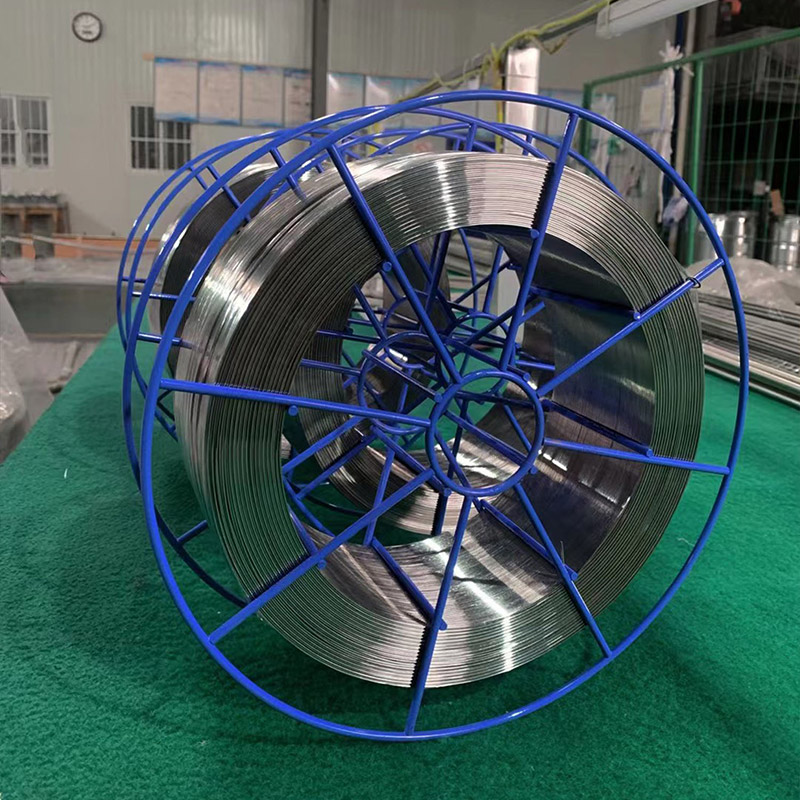
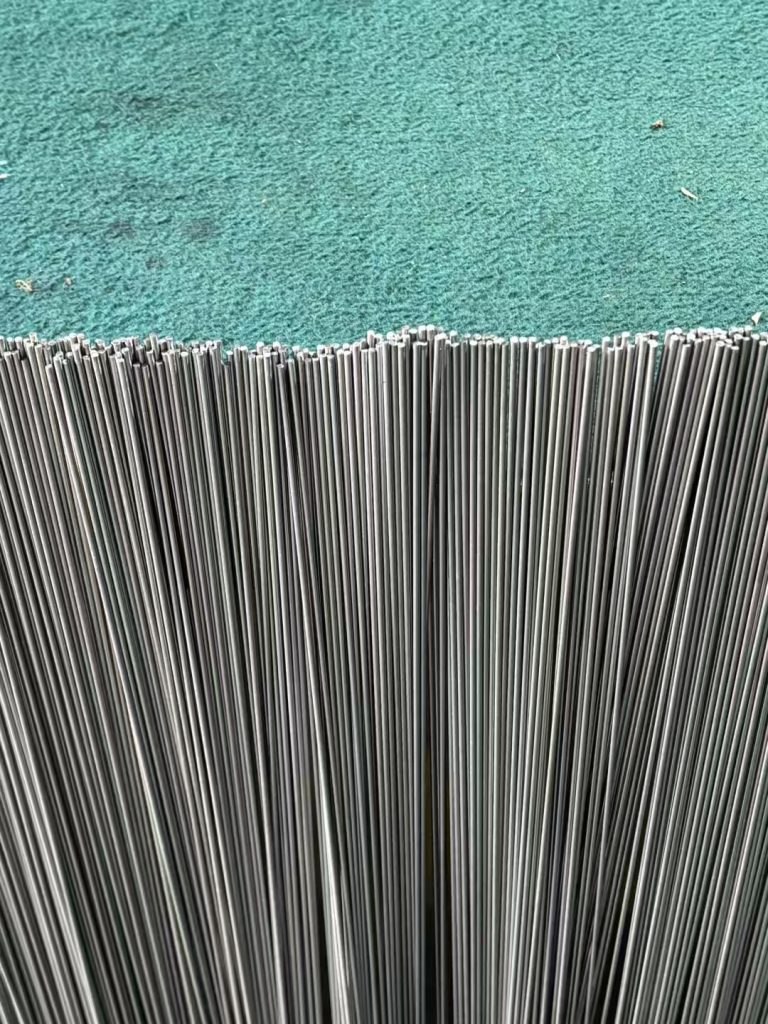
Titanium Wire
Applications:
- Welding
- Medical components
- Precision manufacturing
How to Select the Right Material?
Before choosing titanium or stainless steel, consider:
- Corrosion environment
- Operating temperature
- Mechanical loading
- Required service life
- Maintenance requirements
- Total project cost
A correct material selection can significantly improve equipment reliability and reduce long-term operating expenses.
Our Titanium Manufacturing Capability
Shaanxi Metres Metals Manufacturing Co., Ltd. specializes in titanium materials and custom titanium products for industrial applications.
Our products include:
- Titanium Plate
- Titanium Bar
- Titanium Tube
- Titanium Wire
- Titanium Sheet
- Titanium Custom Components
Available grades:
- Grade 1
- Grade 2
- Grade 5 (Ti-6Al-4V)
- Grade 7
- Grade 9
Products can be supplied according to ASTM standards and customer-specific requirements.
Conclusion
Both titanium and stainless steel are valuable engineering materials, but they serve different purposes.
Stainless steel provides good corrosion resistance at a competitive cost and remains suitable for many industrial applications.
Titanium provides superior corrosion resistance, especially in seawater, chloride environments, and aggressive chemical applications where long-term reliability is critical.
For projects where corrosion failure creates high maintenance costs or production risks, titanium is often the better long-term solution.